(3 de mayo de 1904 – 20 de diciembre de 1983)
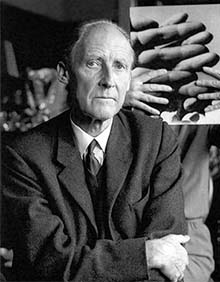 Bill Brandt was born in Hamburg to a British father and a German mother. He began to study drawing very early, although much of his education took place in Vienna. During his childhood the First World War was developing, so at the end of it he adopted the British nationality to have more opportunities than just the German nationality.
Shortly after, he contracted tuberculosis, for which he spent several years in a cure in a sanitarium in Davos, Switzerland. In this city there was a great artistic and literary atmosphere. After healing, he moved to Austria with a brother who encouraged him to take photographs and introduced him to Ezra Pound, who in 1928 was his first model. He was impressed by Brandt’s talent and introduced him to Man Ray who gave him an assistant position that he held for three months.
Photographic trajectory
As he began his work as an assistant photographer in Paris, he was very impressed by the surrealist movement. After taking a trip with his wife Eva, he settled in London in 1931, where he began to carry out a documentary work on the social differences in British society and the contrasts they produced; as well as the problems of unemployment in mining. In these photos the influence of Man Ray, André Kertész, Eugène Atget and in the night photos of his friend Brassaï and his Parisian work are noted.
These works were published in several books: The English at Home in 1936 and A Night in London in 1938. In that same year he published the book A Camera in London that includes several of his photographic approaches. Among some of the ideas he came up with throughout his life are:
- A photographer must possess and retain the receptive powers of a child who is looking at the world for the first time.
- I think that a good portrait should express something of the person’s past and reveal something of his future.
- Often I have the impression that I have already experienced a situation, so I try to represent it as I remember it. Only enlargement allows me to finish my composition work. I don’t see why it could alter the truth of the photo.
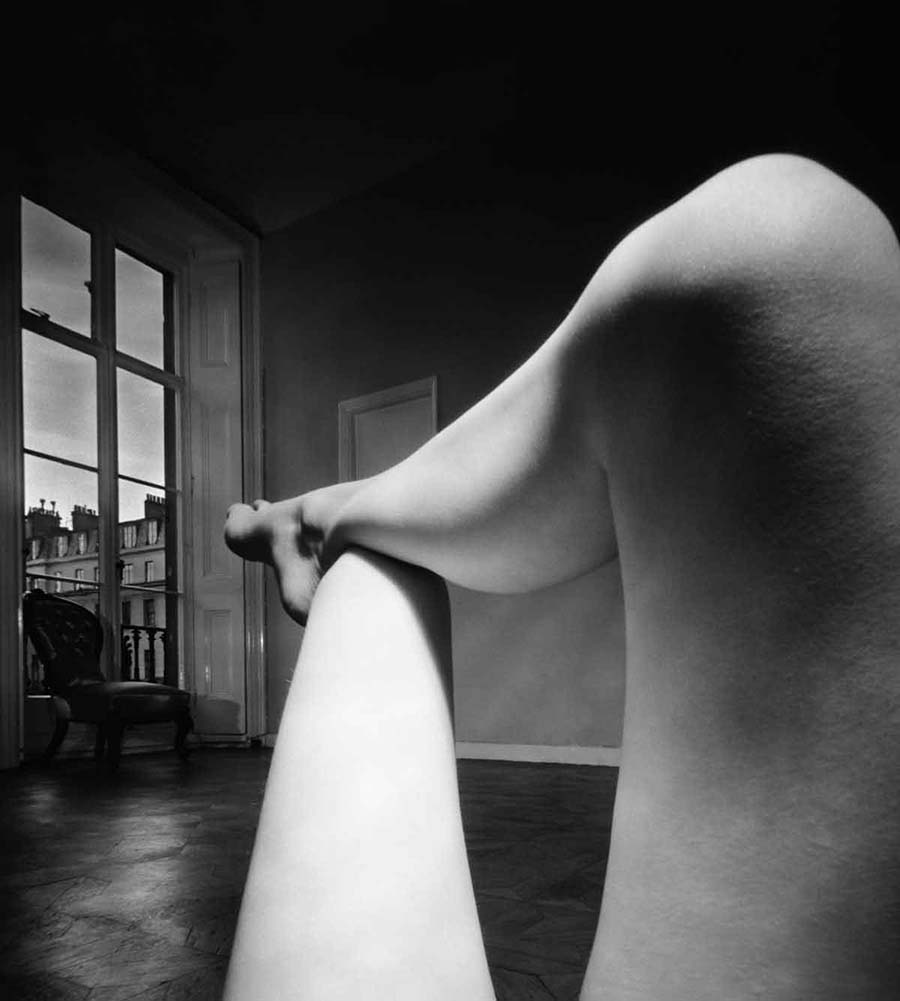
Since 1937, he has regularly published in magazines such as Harper’s Bazaar, Lilliput, Picture Post and The Bystander. His best-known stories dealt with social inequalities in the UK. During World War II he was working for the British government photographing the nightlife of the London population during the bombings, 4 at that time he obtained photographs of the city without people.5 At the end of the war his style gradually changed from graphic reportage to the photography of landscapes, nudes and the human body with the use of wide angle and unusual points of view. He also devoted himself to portraits of British artists for Lilliput, Picture Post and Harper’s Bazaar.
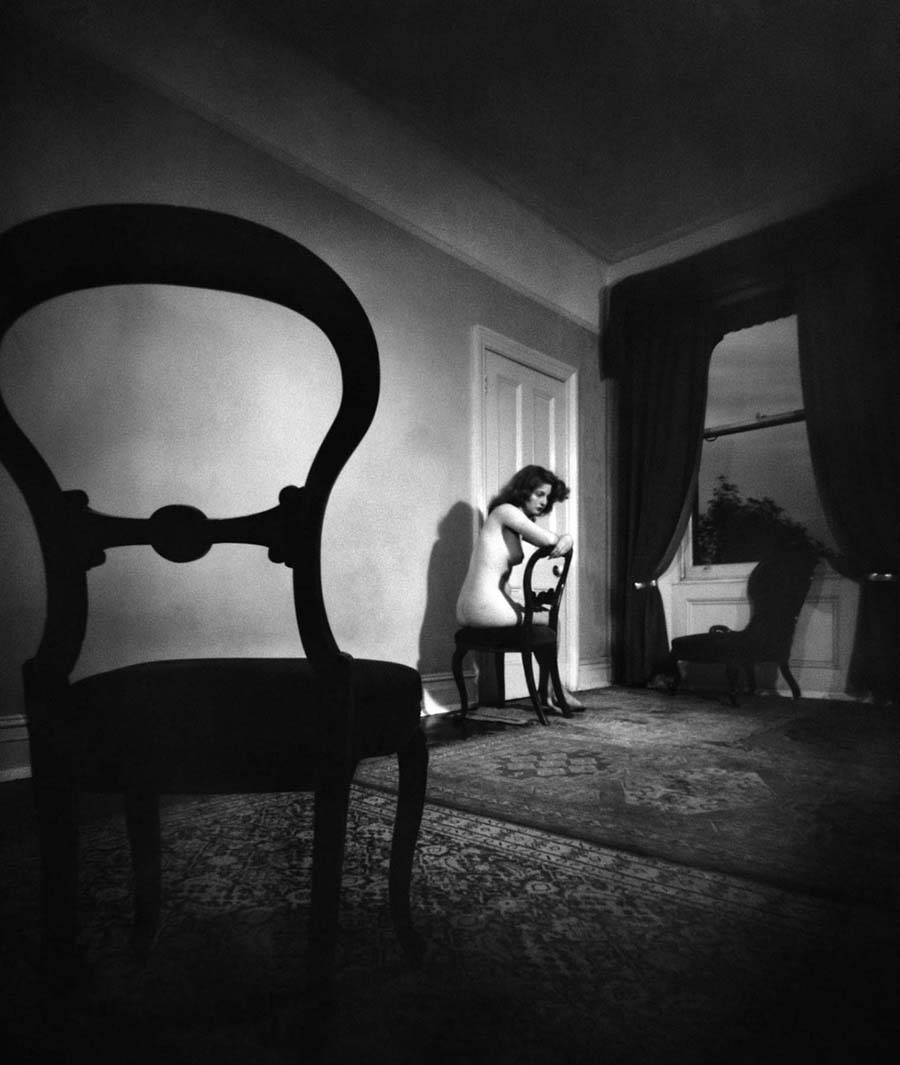
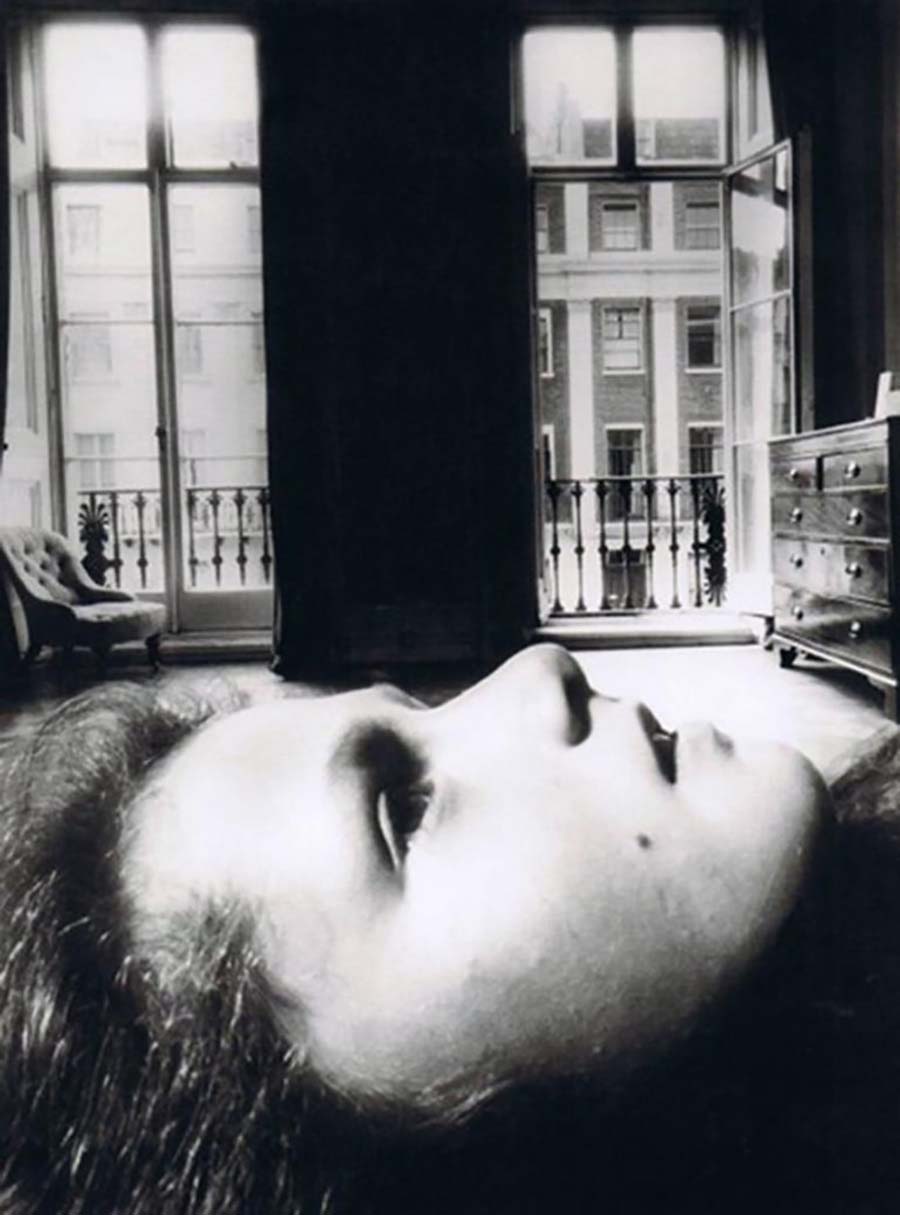
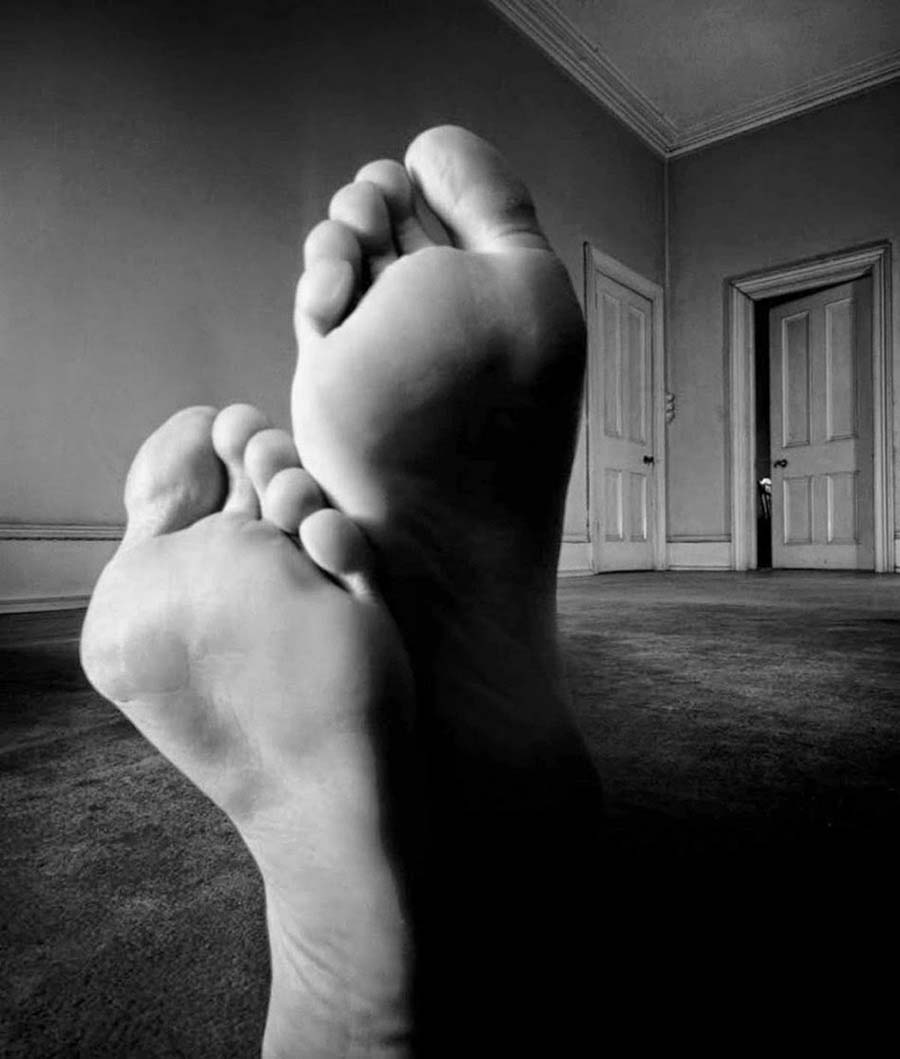
In these works he returned to be interested in the surreal, which led him to a review of nude photography in his book Perspective of nudes, 6 in which he uses wide-angle lenses to obtain deformed and sculptural-type nudes with wide depth of field that are spectacular.7 He is also dedicated to photographing characters with atmospheres and landscape backgrounds that give him a surreal configuration. Among the people portrayed are Pablo Picasso, Francis Bacon, Graham Greene and Peter Sellers.
The landscapes were done in private spaces at first but then he used the beaches of Normandy or the Bay of Anges in Nice. During the last years of his life he was teaching at the Royal College of Art and exhibiting his work; in this way he participated in the exhibition of The family of man invited by Steichen and in 1979 he was awarded by the Royal Photographic Society and shortly before by the Royal Society of Arts. He died on December 20, 1983 from complications with diabetes that had dragged on for more than forty years.
His work was quite influential during the second half of the 20th century. His first monographic exhibition in Spain took place in 2008 at Photoespaña, 9 although some of his works could previously be seen in group exhibitions, such as Focus 86 in 1986 at the Círculo de Bellas Artes in Madrid.
Bibliography
- Brandt, Bill (1936). The English at Home. London: B. T. Batsford.
- Brandt, Bill (1938). A Night in London. London: Country Life.
- Brandt, Bill (1948). The camera in London. London: Focal Press.
- Brandt, Bill (1961). Perspective of Nudes. London: The Bodley Head.
- Brandt, Bill (1966). Ombres d’une Ile. París: Editions Le Belier Prisma.
- Brandt, Bill (1966). Shadow of Light. London: Bodley Head.
- Brandt, Bill (1975). Bill Brandt: Early Photographs, 1930-1942. London: Arts Council of Great Britain.
- Brandt, Bill (1982). Bill Brandt: Nudes 1945-1980. London: Fraser. ISBN 0-86092-051-8.
- Brandt, Bill (1982). Portraits: Photographs by Bill Brandt. London: G. Fraser.
- Brandt, Bill (1983). London in the Thirties. London: G. Fraser.
- Brandt, Bill (1984). Literary Britain. London: Hurtwood Press. ISBN 0-86092-051-8.
- Brandt, Bill (1985). Behind the camera: Photographs 1928-1983. Nueva York: Aperture Press. ISBN 0-89381-181-5.
- Brandt, Bill (1999). The Photographs of Bill Brandt. London: Thames and Hudson.
Some of his Photos


You might also like