(Geldern, October 11, 1954)
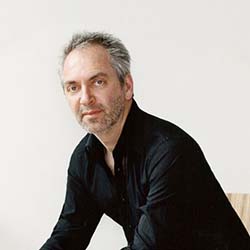 Thomas Struth is a German photographer and artist. His best-known work consists of large-format photographs of museums, portraits, landscapes, and architectural interiors.
His artistic vocation began when he was 13 or 14 years old. In 1973, he began studying painting and art at the Düsseldorf Academy of Fine Arts, first with Peter Kleeman and then with Gerhard Richter. In 1976, he transferred to Bernd Becher’s class to work with photography. In 1978, he moved to Long Island after receiving a scholarship from the Academy of Fine Arts. He taught photography in Karlsruhe between 1993 and 1996.
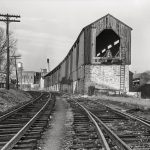
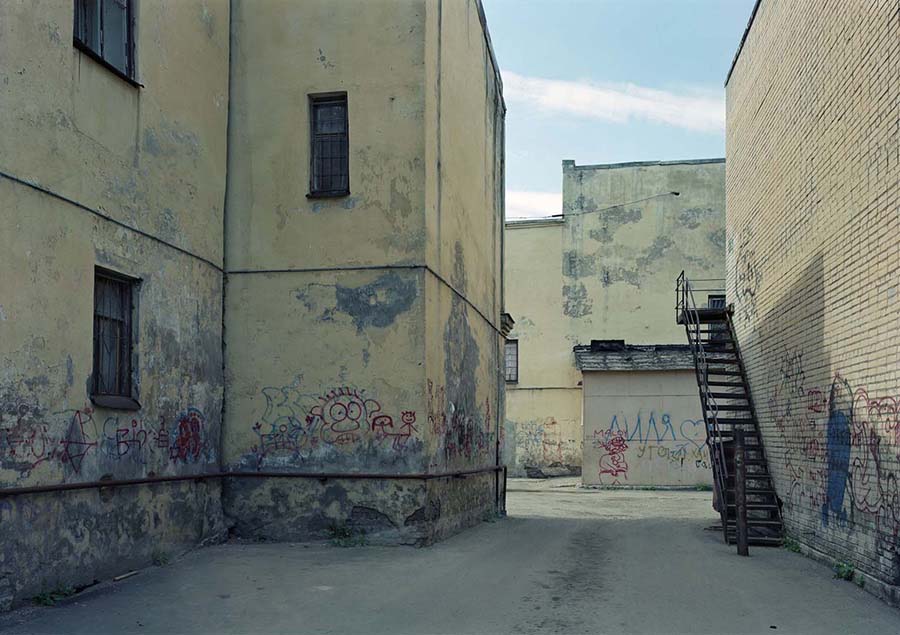
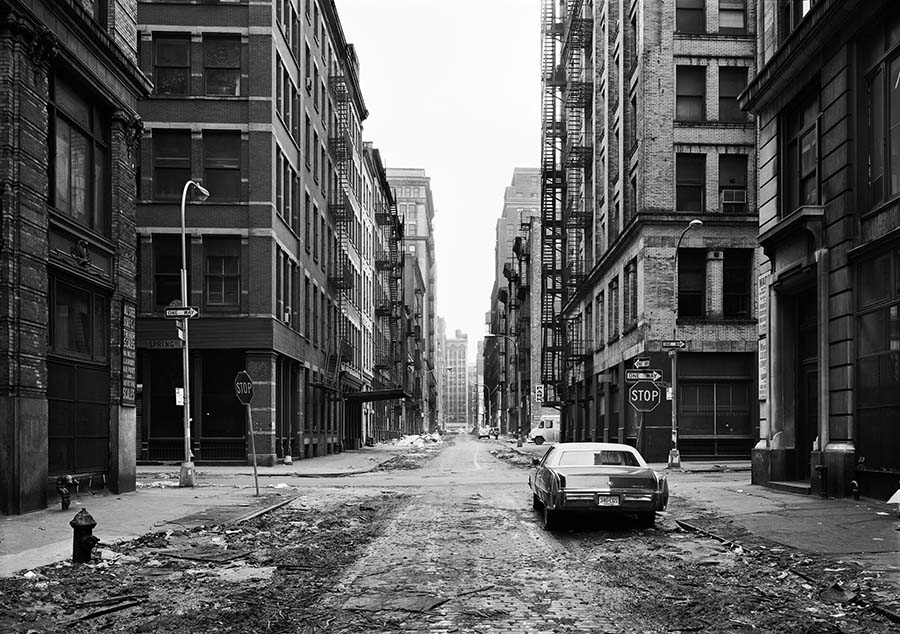
His early works were urban landscapes devoid of people, as well as street scenes, which showed the influence of Bernd and Hilla Becher and their recommendations for the systematic documentation of urban and industrial spaces. Among the cities he has photographed throughout his career are New York, various cities in England, Paris, Rome, Edinburgh, and Tokyo (1986). In 2003, he photographed various cities in Peru in the same way.
Possibly influenced by August Sander, he devoted himself to family portraits in the 1980s, initially using black and white and later color, which show a connection to psychology, as they were part of a joint project with his friend, the psychologist Ingo Hartmann, in which they used photos of patients’ families as a source. However, from 1989 onwards, he began to photograph the interiors of museums and enlarge the photographs to a large format, thus establishing a kind of parallelism between pictorial and photographic representation. These images became his best-known work. Among the museums photographed are the Art Institute of Chicago, the Louvre Museum, the Gallerie dell’Accademia in Venice, the Pantheon in Rome, the Hermitage Museum, and the Prado Museum.
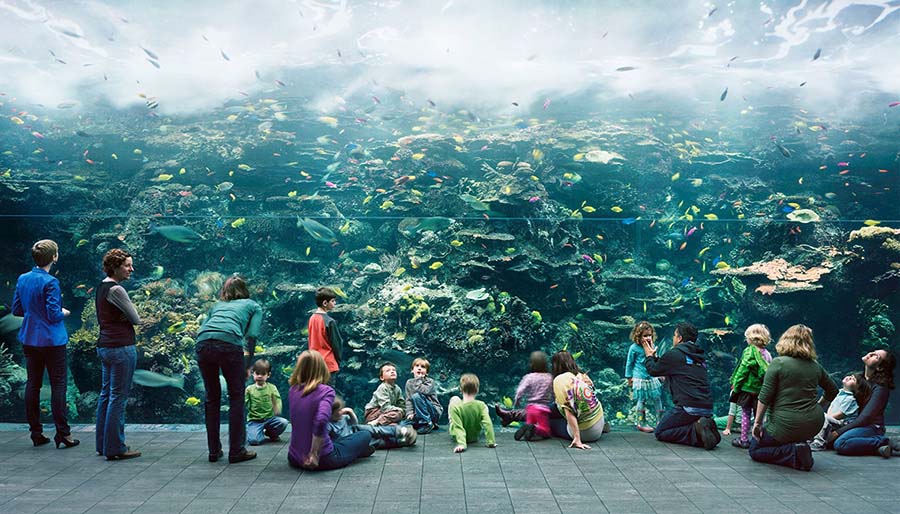
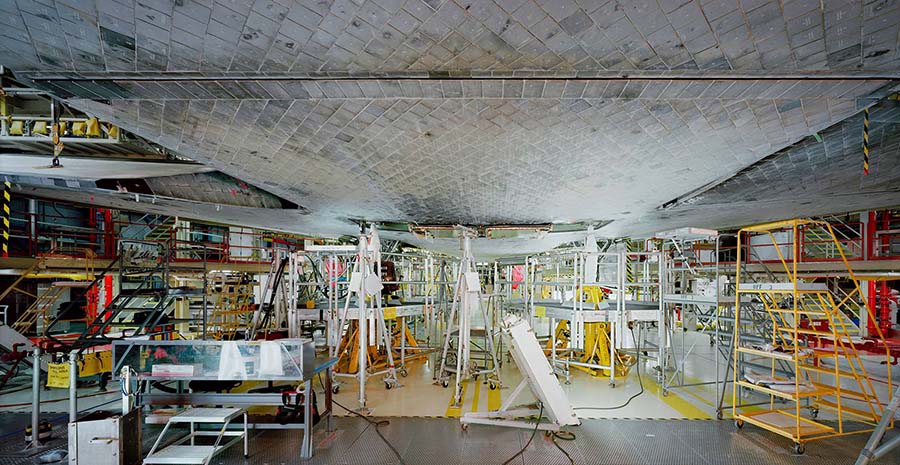
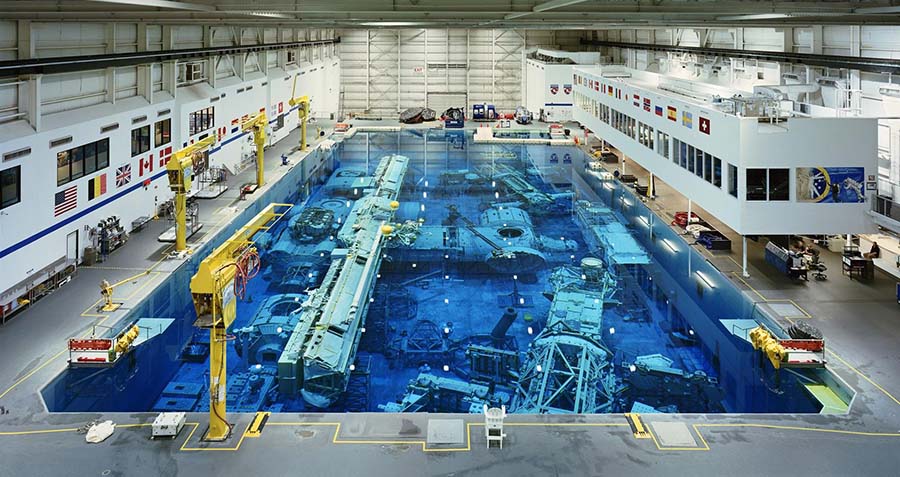
He titled another series “Photos of Paradise,” which consisted of photographs of jungles in Australia, Europe, China, Japan, and America, taken between 1998 and 2006. He has continued to take photographs of landscapes in a broad sense and, in particular, of what he calls “no_places” or spaces without people, in which he seeks a certain timelessness. One of his latest series, begun in 2010, deals with spaces of scientific and industrial research: physics institutes, shipyards, pharmaceutical plants, and nuclear facilities.
He had his first solo exhibition in New York in 1978 when he was completing his initial training with a scholarship from the Kunstakademie (Academy of Fine Arts). In 1991, he was commissioned to decorate a 37-bed hospital in Winterthur. He did so by placing a landscape in front of each bed and photographs of individual flowers behind them, some of which seem to pay homage to the photographer Karl Blossfeldt. This work was published in a book entitled Dandelion Room in 2001.
In 1992, he participated in Documenta IX. In 1997, he received the Spectrum Award from the Niedersachsen Foundation. In 2007, he was the first photographer to exhibit at the Prado Museum. Below is a selection of published photography books and exhibitions.
BIBLIOGRAPHY
- Unbewusste Orte / Unconscious Places, Berna 1987
- Museum Photographs, Múnich 1993
- Strangers and Friends, 1994
- Stefen Gronert und Christoph Schreier: Thomas Struth. Straßen. Fotografie 1976 bis 1995, Kunstmuseum Bonn, Colonia, 1995.
- Portraits, Múnich 1997
- Still, Múnich 1998
- Struth, Múnich2000
- Thomas Struth – My Portrait, 2000
- Löwenzahnzimmer, Múnich 2001
- New Pictures from Paradise, Múnich 2002
- Photographien 1977-2002, Múnich 2002
- Pergamon Museum, Múnich 2004
- Museum Photographs, Múnich 2005
- Les Museum Photographs de Thomas Struth. Une mise en abyme, París/Múnich 2005
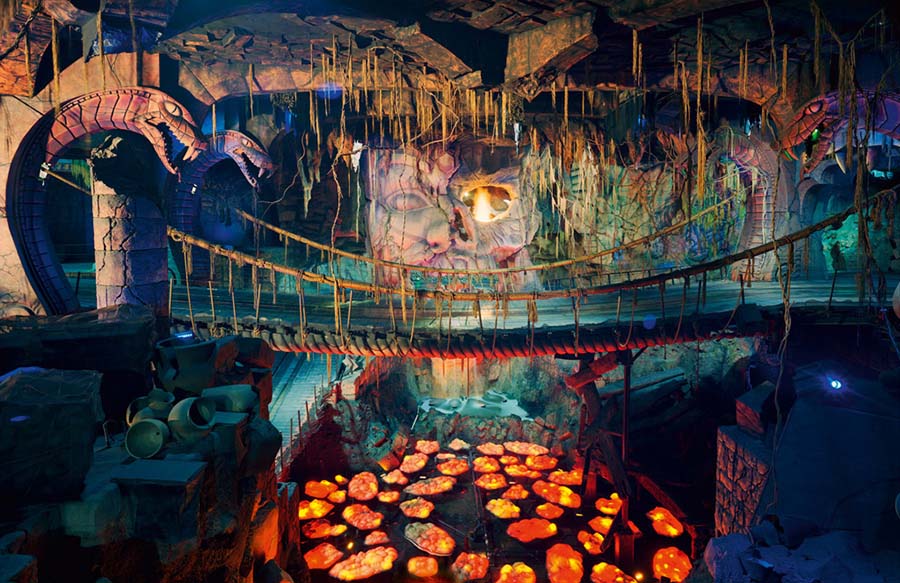
SOME PHOTOS

You might also like