(July 2, 1894, Budapest, Hungary – September 28, 1985, New York City, USA)
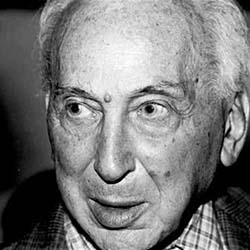 André Kertész was a Hungarian photographer known for his contributions to photographic composition and his efforts to establish and develop the photo essay.
During the early years of his career, his work was not appreciated due to his unorthodox angles and his desire to maintain a personal photographic style. Even at the end of his life, he felt that he had not received the recognition he deserved.
Today, he is considered one of the most influential figures in photojournalism. Although his family wanted him to work as a stockbroker, he became a self-taught photographer and his early work was published mainly in magazines, a trend that continued throughout most of his career.
He served briefly in World War I. In 1925, he moved to Paris against his family’s wishes, where he became part of the growing group of immigrant artists and the Dadaist movement. His work in Paris earned him commercial success and critical acclaim. However, the looming threat of World War II forced him to emigrate to the United States, where he had a more difficult life, having to rebuild his reputation through commissions. He also had altercations with several publishers, as he felt they did not recognize his work. During the 1940s and 1950s, he stopped working for magazines and gained international success. Despite the numerous awards he received during his career, Kertész felt that the public and critics did not value his work, a sentiment that lasted until his death. His career is generally divided into four periods: Hungarian, French, American, and international.
Andor (his original name), whom his friends called “Bandi,” was the second of three children. When his father died of tuberculosis in 1908, Ernesztin was left without a source of income to care for her children Andor, Imre, and Jenő. Fortunately, her brother Lipót Hoffmann helped the family and was like a father to the children. The Kertész family moved to Lipót’s country house in Szigetbecse. There, Kertész enjoyed a relaxed life, surrounded by pastoral landscapes that would later influence his career.
Lipót paid for Kertész’s studies at the Academy of Commerce until his graduation in 1912. He then ensured that he was hired as a stockbroker. Unlike his brother Imre, who worked on the stock exchange until his death in 1957, Kertész had no interest in this career. Instead, he was drawn to the idea of illustrating magazines and to activities such as fishing and swimming. The photographs he saw in magazines led him to dream of becoming a photographer. He was also influenced by various paintings by Tihanyi Lajos and Gyula Zilzer and by poetry.
In 1912, when he had enough money, Kertész bought his first camera (a rectangular ICA camera), despite his family’s protests that he continue his career in business. During his free time, Kertész began taking photographs of local peasants, gypsies, and the landscapes of the Great Hungarian Plain. His first photograph is believed to be “Sleeping Child, Budapest, 1912,” although his work was not published until after 1917, when he was a member of the Austro-Hungarian army in World War I. His photographs were first published in the magazine Érdekes Újság. Kertész taught himself how to use a camera. By 1914, his distinctive and mature style was evident (for example, “Eugene, 1914”).
In 1914, at the age of 20, he was sent to the front lines, where he took photographs of life in the trenches with a light camera (a Goerz Tenax). Unfortunately, most of these photographs were destroyed during the Hungarian revolution of 1919. In 1915, he was wounded by a bullet and his right arm was temporarily paralyzed.
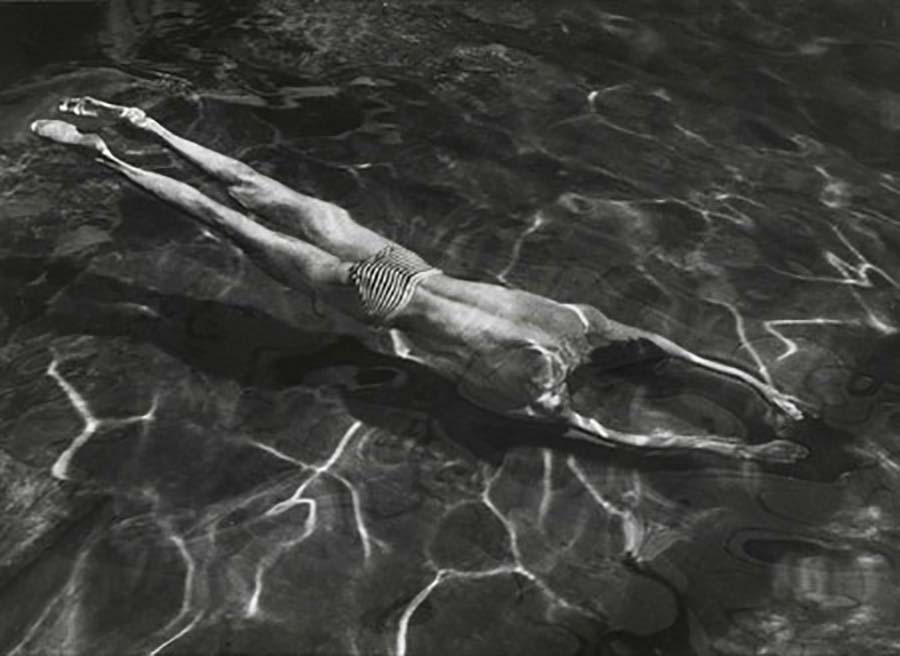
Kertész was sent to a military hospital in Budapest, but was later transferred to Esztergom, where he continued to take photographs, including a self-portrait that he entered in a competition run by Borsszem Jankó magazine. The best-known work from this period is “Underwater Swimmer, Esztergom, 1917,” the only surviving photograph from a series showing swimmers whose images are distorted by the water. This series sparked Kertész’s interest in distortions, leading him to produce a series called “Distortions” in the early 1930s.
Kertész remained away from the battlefield for the rest of the war. When it ended, he returned to work on the stock exchange. There he met his future wife, Erzsebet Salomon (who later changed her name to Elizabeth Saly). During this period and for the rest of his career, Elizabeth would model for many of his photographs.
Kertész continued to devote his free time to photography and took numerous photographs with his brother Jenő as his model. Dissatisfied with his work on the stock exchange, in the early 1920s he abandoned his career to devote himself to agriculture and beekeeping. However, this venture was short-lived due to political unrest and communism in rural Hungary.
After returning to his job as a stockbroker, Kertész decided to leave Hungary, mainly to escape his lifestyle, but also to join one of the photography schools in France. However, his mother persuaded him not to leave. His dream of leaving Hungary would not come true until several years later. In the meantime, he continued to work on the stock exchange and devote himself to photography in his spare time.
In 1923, the Hungarian Amateur Photographers’ Association offered him a silver medal for one of his photographs, but on the condition that it be printed using the bromoleotype process. Kertész refused to use this process and rejected the medal, accepting only a diploma from the association.
However, he was rewarded when one of his photographs appeared on the cover of Érdekes Újság magazine in its June 26, 1925 issue. The magazine had already reproduced one of his photographs in its March 25, 1917 issue, but this was the first time a photo by Kertész appeared on the cover. By then, he had already decided to move to Paris so he could make use of the city’s artistic elements.
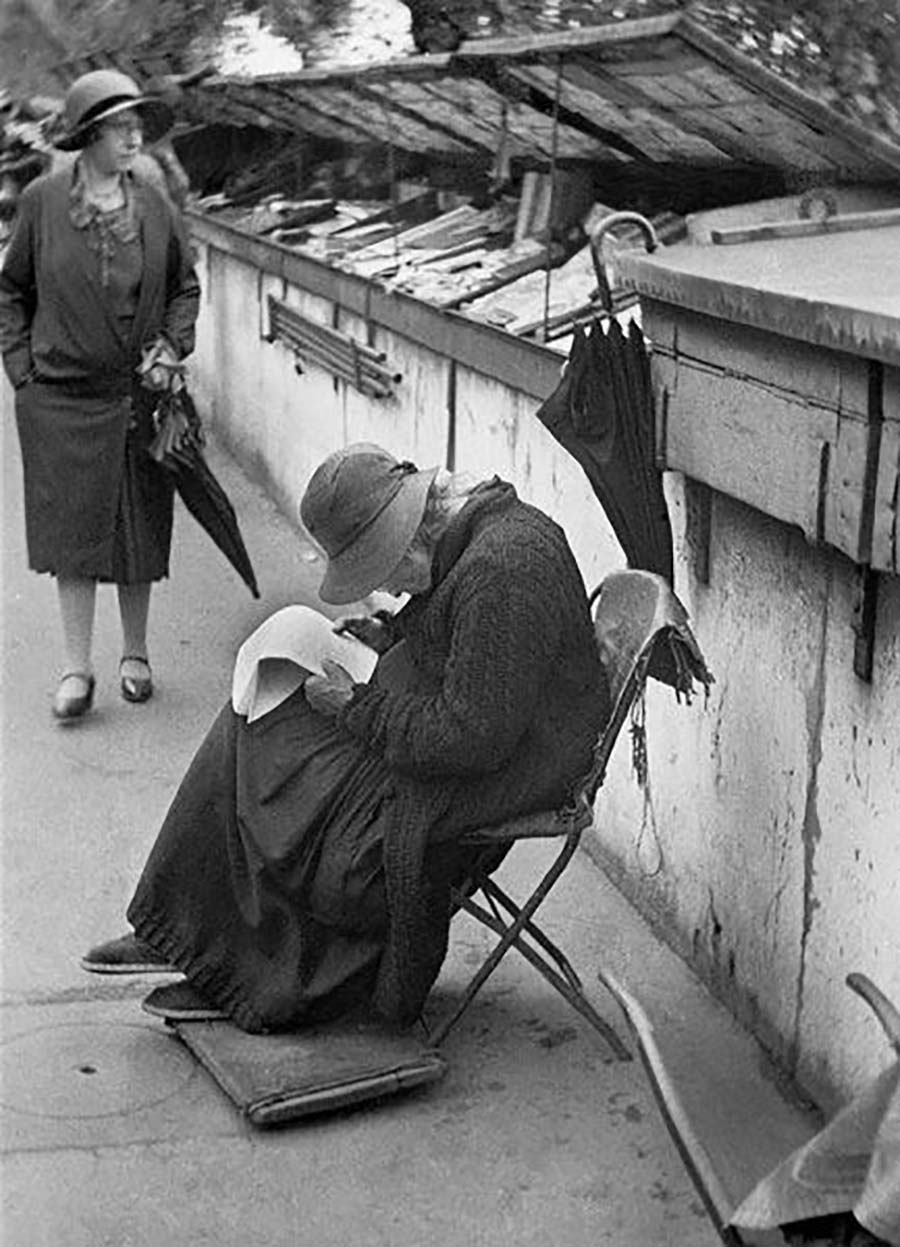
Kertész emigrated to Paris in September 1925 against his mother’s wishes, leaving behind his siblings, Elizabeth, and his uncle Lipót, who died shortly afterwards. His brother Jenő also emigrated to Argentina, but Elizabeth remained in Hungary until Kertész was able to settle in Paris. Kertész was one of many artists who emigrated from the Austro-Hungarian Empire, including François Kollar, Robert Capa, Emeric Fehér, and Brassaï. Other artists also immigrated during this period, such as Man Ray, Germaine Krull (who participated in some exhibitions with Kertész), and Lucien Aigner, among others. In Paris, Kertész achieved commercial and critical success by publishing in magazines and later doing commissioned work for various European magazines. He was the first photographer to have a solo exhibition when Jan Slivinsky organized a series of solo exhibitions for thirty photographers at the Gallerie Au Sacre du Printemps in 1927.
After his arrival in Paris, Kertész changed his name from Andor to André, which he would use for the rest of his life. At that time, many photographers were interested in Dadaism, which was becoming a significant artistic movement, especially in France. Kertész soon met several members of the movement and became involved with them. He also contacted and visited other Hungarian photographers and artists while in Paris. Later, he would hold exhibitions alongside some of these artists. Kertész particularly enjoyed visiting his sculptor friends and was also impressed by Cubism. In his spare time, he photographed several artists, including painters Piet Mondrian and Marc Chagall, writer Colette, and filmmaker Sergei Eisenstein. In 1928, Kertész stopped using plate cameras and purchased a Leica; he quickly became accustomed to his new camera. This period, especially the late 1920s, was one of the most productive of his career, as he took photographs daily and published several of them in magazines. He also carefully divided his time between commissions and his personal photography. In 1930, Kertész won a silver medal for his services to photography at the Exposition Coloniale in Paris.
Kertész emigrated to Paris in September 1925 against his mother’s wishes, leaving behind his siblings, Elizabeth and his uncle Lipót, who died shortly afterwards. His brother Jenő also emigrated to Argentina, but Elizabeth remained in Hungary until Kertész was able to establish himself in Paris. Kertész was one of many artists who emigrated from the Austro-Hungarian Empire, including François Kollar, Robert Capa, Emeric Fehér, and Brassaï. Other artists also emigrated during this period, such as Man Ray, Germaine Krull (who participated in some exhibitions with Kertész), and Lucien Aigner, among others. In Paris, Kertész achieved commercial and critical success by publishing in magazines and later doing commissioned work for various European magazines. He was the first photographer to have a solo exhibition when Jan Slivinsky organized a series of solo exhibitions for thirty photographers at the Gallerie Au Sacre du Printemps in 1927.
After his arrival in Paris, Kertész changed his name from Andor to André, which he would use for the rest of his life. At that time, many photographers were interested in Dadaism, which was becoming an important artistic movement, especially in France. Kertész soon met several members of the movement and became involved with them. He also contacted and visited other Hungarian photographers and artists while in Paris. Later, he would hold exhibitions alongside some of these artists. Kertész particularly enjoyed visiting his sculptor friends and was also impressed by Cubism. In his spare time, he photographed several artists, including painters Piet Mondrian and Marc Chagall, writer Colette, and filmmaker Sergei Eisenstein. In 1928, Kertész stopped using plate cameras and bought a Leica, which he quickly got used to. This period, especially in the late 1920s, was one of the most productive of his career, as he took photographs daily and published several of them in magazines. He also carefully divided his time between commissions and his personal photography. In 1930, Kertész won a silver medal for his services to photography at the Colonial Exhibition in Paris.
Although his family did not know, Kertész had married a French photographer named Rosza Klein (also known as Rogi André) in the late 1920s. The marriage was short-lived, and Kertész never spoke about it until his death so as not to disappoint Elizabeth. In 1930, he traveled to Hungary to visit his family, but returned to Paris shortly thereafter. Elizabeth moved in with him in 1931, despite her family’s opposition, and the couple remained together from then on. They were married on June 17, 1933, and Kertész began spending less time with his artist and photographer friends in order to be with his wife.
When Kertész married, the Nazi Party was gaining power in Germany. This led magazines to begin publishing reports on politics. Many magazines stopped publishing Kertész’s photographs, as they had no connection to political issues. From then on, Kertész began to receive fewer commissions, so, with Elizabeth’s consent, he planned to move to New York to work with Ernie Prince’s Keystone agency. In 1936, faced with the threat of World War II and a lack of work, Kertész and Elizabeth boarded the SS Washington bound for Manhattan.
American Period
Kertész arrived in New York on October 15, 1936, with the intention of rekindling his inspiration and making a name for himself as a photographer in the United States. The couple settled at the Beaux Arts Hotel in Greenwich Village. Upon his arrival, Kertész discovered that life in the United States was more difficult than he had imagined. He would later refer to this period of his life as an “absolute tragedy.” He no longer had his artist friends from France, and people in the United States were not as friendly when photographed as people in Paris. Shortly after his arrival, Kertész contacted Beaumont Newhall, the director of the photography department at the Museum of Modern Art in New York, who was preparing an exhibition entitled Photography 1839–1937. However, when Kertész offered him some of the photographs from “Distortions,” Newhall criticized them, which offended Kertész. Despite this, Newhall exhibited the photographs. In December 1937, Kertész held a solo exhibition at the PM Gallery. His situation worsened when the Keystone agency made him spend most of his time working in the company’s studio, despite having offered him transportation to different locations to do photojournalism. Kertész tried to visit France, but he had no money. By the time he had saved enough, World War II had begun, making the trip impossible. His problems with English also affected him. In France, he had coped with his inability to speak French, but in New York, where he felt like an outsider, his language problems had a greater effect.
Feeling increasingly frustrated with the city, Kertész left Keystone after his boss Ernie Prince left the company in 1937. Subsequently, Harper’s Bazaar magazine commissioned him to take photographs for an article on Saks Fifth Avenue department store for its April 1937 issue. Kertész continued to work with the magazine, as well as accepting commissions from Town & Country to supplement his income. Vogue magazine offered him a job, but he turned down the offer, fearing that he would not be able to photograph in a studio as was customary in the fashion world. Instead, he accepted a job at Life magazine. His first work for them was a piece called The Tugboat. Despite the instructions he received, Kertész did not limit himself to photographing tugboats, but rather the entire dock and its activities. Because of this, Life refused to publish his photos. Once again, Kertész felt frustrated with the city and its photography industry.
In the October 25, 1938 issue of Look, the magazine published a series of photographs by Kertész called A Fireman Goes to School, but the credits were given to Ernie Prince, his former boss. Kertész, enraged, contemplated never working for a magazine again. However, his photographs appeared in Coronet magazine in 1937, but in 1939 he was disappointed when the magazine did not include any of his photos among those selected for Coronet’s special issue “Most Memorable Photographs.” Kertész subsequently ended his relationship with the magazine and its editor Arnold Gingrich. The situation was repeated in the June 1941 issue of Vogue, dedicated to photographs in honor of Condé Montrose Nast, founder of Condé Nast Publications. Despite having done more than thirty photo shoots for Vogue and House & Garden, Kertész did not appear on the list of photographers. That same year, Kertész and Elizabeth were declared enemy aliens, as they both held Hungarian passports, and he was therefore not allowed to photograph outdoors or anything related to national security. Later, he would be fingerprinted. Kertész stopped taking assignments and gave up photography for three years, as he did not want to be arrested or get into political trouble so as not to harm Elizabeth, who had started a cosmetics business (Cosmia Laboratories) with a Hungarian friend.
Elizabeth obtained US citizenship on January 20, 1944, and her husband on February 3. Despite fierce competition from other photographers such as Irving Penn, Kertész continued to receive commissions. Although he was not included among the sixty-three photographers in Vogue’s “photographic family tree” (which included the most important photographers of the era), he was hired by House & Garden to do a Christmas commission. In June 1944, László Moholy-Nagy offered him a teaching position at the New Bauhaus – American School of Design, but Kertész declined the offer. In 1945, he released a new book of photographs called Day of Paris, which included photographs he had taken just before leaving Europe. The book was a critical success. Kertész accepted a long-term contract with House & Garden in 1946. Although the contract restricted his editorial work and required him to spend most of his time in the studio, he was paid $10,000 and had all his negatives returned to him after six months.
Although the subjects he could photograph were limited, Kertész was sent to various famous locations and homes. He even made international trips, visiting England, Paris, and Budapest. Between 1945 and 1962, more than 3,000 of his photographs were published in House & Garden, and he became well known in the photography industry. However, he did little personal work during this period.
In 1946, Kertész held a solo exhibition at the Art Institute of Chicago, consisting mainly of photos from the Day of Paris series. He often referred to this as one of his finest moments in the United States. This was his last exhibition until 1962, when some of his photographs were exhibited at Long Island University. During his time working for House & Garden, Kertész felt insulted again when his work did not appear in Edward Steichen’s famous exhibition The Family of Man at the Museum of Modern Art in New York in 1955. At the end of 1961, he broke his contract with Condé Nast Publishing due to a minor altercation. Freed from the restrictions imposed by the magazine, Kertész tried to return to the international photography scene. This part of his life is known as his international period, as he gained international fame and held exhibitions in several countries. In 1963, he participated in the IV Mostra Biennale Internazionale della Fotografia in Venice and later that year held an exhibition at the National Library of France in Paris. In Venice, he received a gold medal for his dedication to the photography industry. He would later visit his brother Jenő in Argentina.
During this period, Kertész experimented with color photography, although he only took a few color photographs. In 1964, Kertész held a solo exhibition at the Museum of Modern Art, shortly after John Szarkowski became the museum’s director of photography. The exhibition was critically acclaimed, and as a result, Kertész was considered a prominent figure in photographic circles. In 1952, he moved with his wife to an apartment near Washington Square Park. There, Kertész took some of his best photographs since arriving in the United States. The photos, taken with a telephoto lens, showed the park covered in snow with numerous silhouettes and footprints.
In the years that followed, in addition to participating in numerous exhibitions around the world, he also received several awards: in 1965, he was named a member of the American Society of Media Photographers; in 1974, he was awarded a Guggenheim Fellowship and named a Commander of the Order of Arts and Letters; in 1977, he received the Mayor’s Award of Honor for Arts and Culture in New York; in 1980, he was awarded the Médaille de la Ville de Paris (Medal of the City of Paris); and in the same year, he won the first Annual Award of the Association of International Photography Art Dealers. In 1981, he received an honorary doctorate from Bard College and received the Mayor’s Award of Honor for Arts and Culture for the second time. Kertész produced several books during this period and recovered several of the negatives he had left in France years earlier.
During his later years, Kertész traveled to several countries for his exhibitions, especially Japan, and managed to reestablish his relationships with other artists. Elizabeth died of cancer in 1977. To cope with his loss, Kertész began spending more time with his friends, visiting them some evenings to talk. By then, he had learned basic English and spoke to his friends in a strange mixture of English, Hungarian, and French. In 1979, Polaroid gave him one of its new SX-70 models, a camera he experimented with during the 1980s. In 1982, he was awarded the Grand Prix National de la Photographie in Paris and won the 21st Annual George Washington Award from the American Hungarian Foundation. His agent, Susan Harder, actively sought recognition for Kertész’s contributions to the history of photography. In 1983, Kertész received an honorary doctorate from the Royal College of Art. That same year, he was named a Knight of the Legion of Honor and was given an apartment for his future visits to Paris. Other honors he received include the Annual Lifetime Achievement Award from the Maine Photographic Workshop (1984), the Californian Distinguished Career in Photography Award (1985), the first Annual Master of Photography Award from the International Center of Photography (1985), and an honorary doctorate from Parsons The New School for Design. In addition to these honors, the Metropolitan Museum of Art purchased 100 of his photographs in 1984, the largest acquisition of photographs by a living artist ever made by a museum.
Kertész died at home in his sleep on September 28, 1985. His remains were cremated and buried alongside those of his wife.
Legacy
Kertész felt that his work had not been properly recognized, despite having spent most of his life seeking acceptance and fame. Although he received numerous awards for his photographs, he never felt that his style was accepted in the same way by critics and audiences. In 1927, he was the first photographer to hold a solo exhibition. During his time in the United States, he was considered an intimate artist, capable of drawing the viewer into his works, even if the subject of the photograph was New York City. After his death, his work continued to receive positive reviews, and he was considered a consistently fine photographer. His work is known for its predominant use of light; Kertész himself said, “I write with light.” Kertész was not a follower of any political movement, and his photographs were limited to representing the simplicity of life. With their intimate style and nostalgic tone, his photographs convey a sense of eternity that was not recognized until after his death. Unlike other photographers, his works gave an idea of his lifestyle, showing in chronological order the places he had been; for example, many of the photographs from his French period were taken in cafés where he spent most of his time seeking inspiration. Although he almost never received negative reviews, it was the lack of criticism that led him to feel a lack of recognition. Today, Kertész is considered the father of photojournalism. Several photographers have been influenced by Kertész’s work, including Henri Cartier-Bresson.
Bibliography
- 1933 – Enfants, publicado en París por Éditions d’Histoire et d’Art (54 fotografías)
- 1934 – Paris Vu Par André Kertész, publicado en París por Éditions d’Histoire et d’Art (48 fotografías del tiempo que pasó en París)
- 1936 – Nos Amies les Bêtes, publicado en París por Éditions d’Histoire et d’Art (60 fotografías de varios animales)
- 1937 – Les Cathédrales du Vin, publicado en París por Etablissements et Brice (28 fotografías)
- 1945 – Day of Paris, publicado en Nueva York por J.J. Augustin (126 fotografías del periodo francés)
- 1964 – André Kertész, Photographer, publicado en Nueva York por el Museo de Arte Moderno (64 fotografías de su exhibición en el MOMA)
- 1966 – André Kertész, publicado en Nueva York por Paragraphic Books (76 fotografías)
- 1968 – The Concerned Photographer, publicado en Nueva York por Grossman Publishers luego de la exhibición “The Concerned Photographer”
- 1971 – On Reading, publicado en Nueva York por Grossman Publishers (varias fotografías de gente leyendo)
- 1972 – André Kertész: Sixty Years of Photography, 1912–1972, publicado en Nueva York por Grossman Publishers (250 fotografías)
- 1974 – J’aime Paris: Photographs Since the Twenties, publicado en Nueva York por Grossman Publishers (219 fotografías de sus años en París y de sus viajes posteriores a la ciudad)
- 1975 – Washington Square, publicado en Nueva York por Grossman Publishers (104 fotografías del Washington Square Park tomadas usando un teleobjetivo)
- 1976 – Distortions, publicado en Nueva York por Alfred A. Knopf (200 fotografías de dos modelos desnudos frente a espejos cóncavos y convexos)
- 1976 – Of New York, publicado en Nueva York por Alfred A. Knopf (184 fotografías tomadas en Nueva York)
- 1977 – André Kertész, publicado en Nueva York Aperture Inc (44 fotografías, parte de la serie History of Photography de Aperture Inc)
- 1979 – Americana, publicado en Nueva York por Mayflower Books Inc (64 fotografías mostrando el estilo de vida estadounidense)
- 1979 – Birds, publicado en Nueva York por Mayflower Books Inc (64 fotografías de aves)
- 1979 – Landscapes, publicado en Nueva York por Mayflower Books Inc (64 fotografías de paisajes)
- 1979 – Portraitspublicado en Nueva York por Mayflower Books Inc (64 retratos)
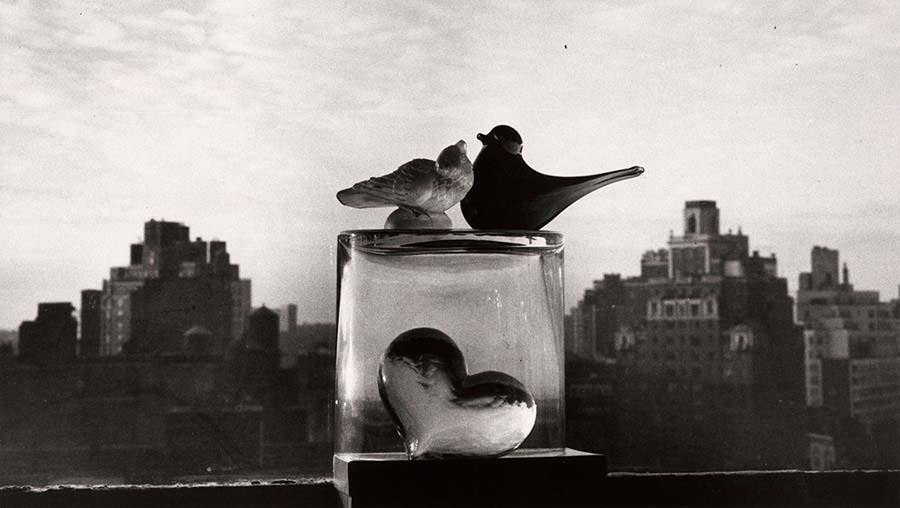
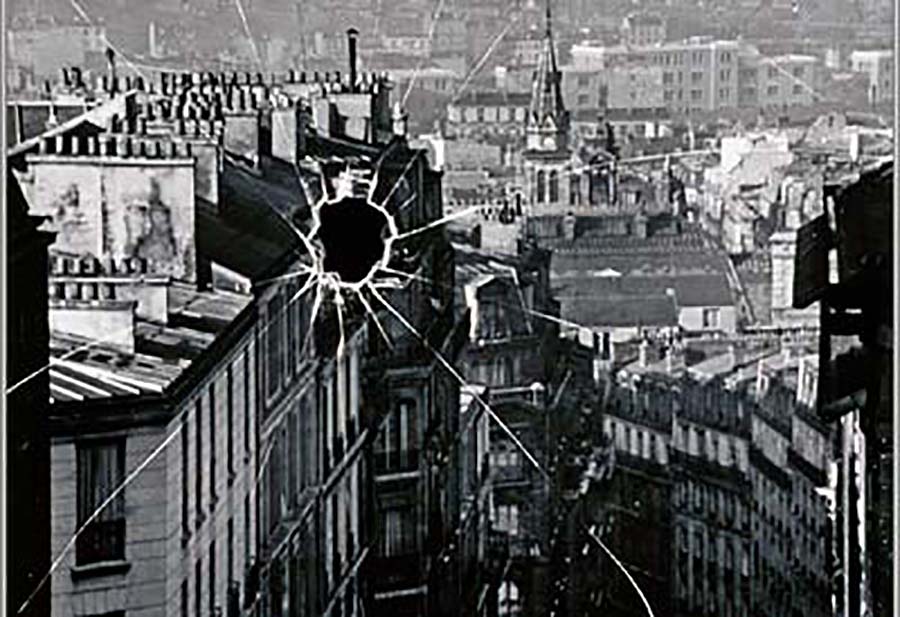
- 1981 – From My Window, publicado en Boston por New York Graphic Society/Little Brown (53 fotografías en color)
LINKS
SOME PHOTOS

You might also like