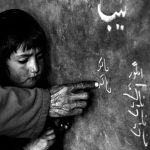
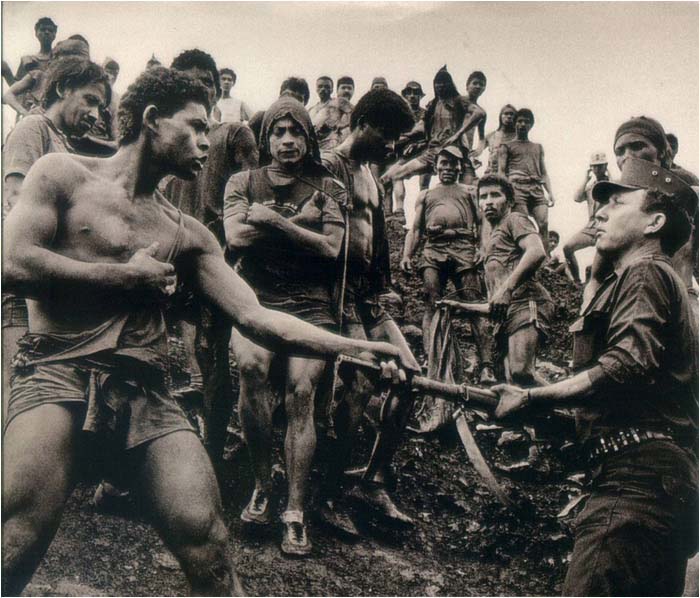
(1044, Aimorés, Minas de Gerais, Brazil)
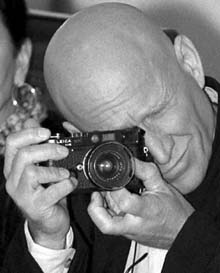 Sebastiao Salgado is a Brazilian photographer born in Aimorés, Minas Gerais. In 1998 he received the Prince of Asturias Award for the Arts.
Salgado belongs to those photographers committed to the social, in the tradition of socio-documentary photography. He worked in the administration of the OIC (International Coffee Organization), but in 1973 he abandoned his career to dedicate himself to photography, a field he arrived at relatively late and self-taught. In his career as a photographer he started working for the Paris-based Gamma agency, but in 1979 he joined Magnum Photos.
In 1994 he left Magnum to form his own agency Amazonas Images in Paris to represent his work. The documentation of the work of people in less developed countries or in situations of poverty stands out in his work.
He was nominated special representative of UNICEF in 2001.
In the introduction to “Exodus” he says: “More than ever, I feel that there is only one human race. Beyond the differences in color, language, culture and possibilities, the feelings and reactions of each individual are identical . “
During the early 2000s, New York Times journalists and writer Susan Sontag criticized Salgado’s photographs. The photographer was accused of cynically and commercially using human misery, of exposing dramatic situations in a beautiful way, running the risk of losing their authenticity.
He works on his own long-term projects, some of which have been published in books such as Other Americas, Exodus, …. His best-known photographs could be those taken at the Serra Pelada gold mines in Brazil. He usually photographs in black and white with Leica. In June 2007 he had a great anthological exhibition about his work in Madrid, within PHotoEspaña. the exhibition has won the Festival Audience Award.
In 1989 he received the Hasselblad Foundation International Prize.
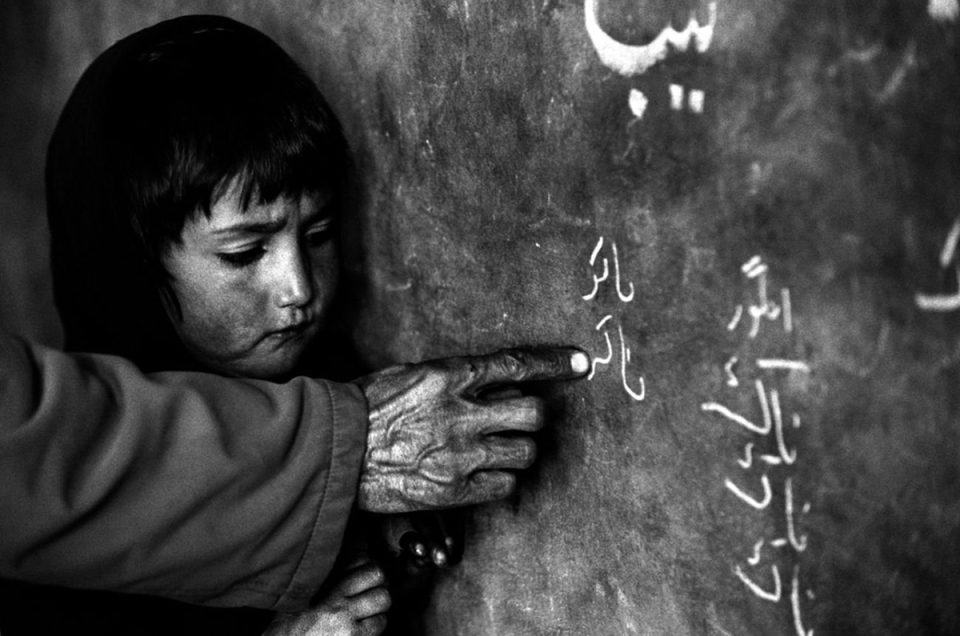
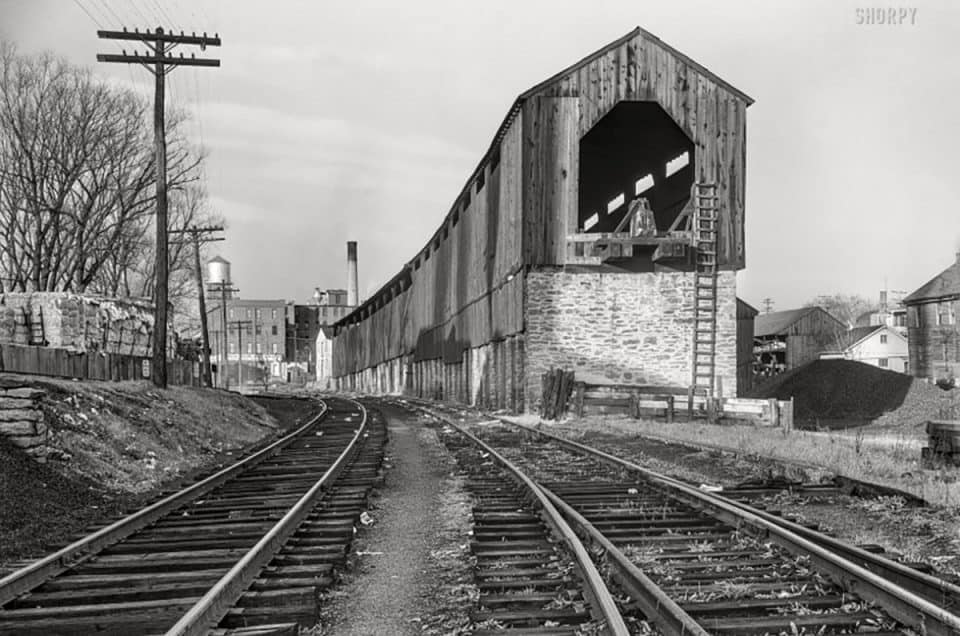
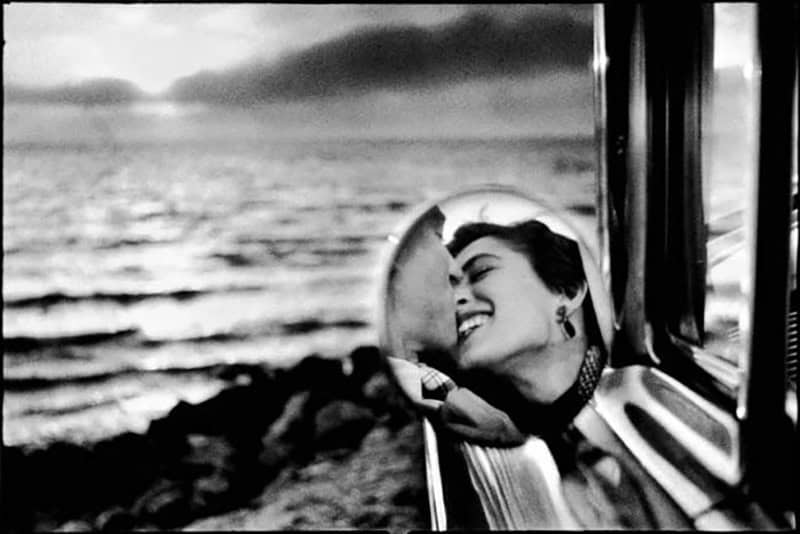
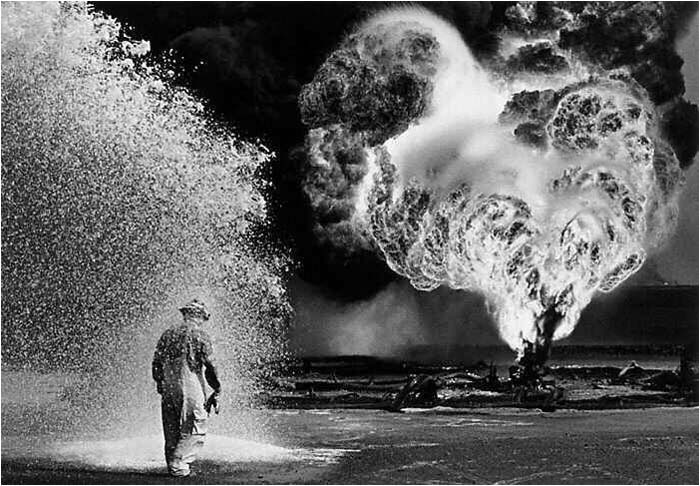
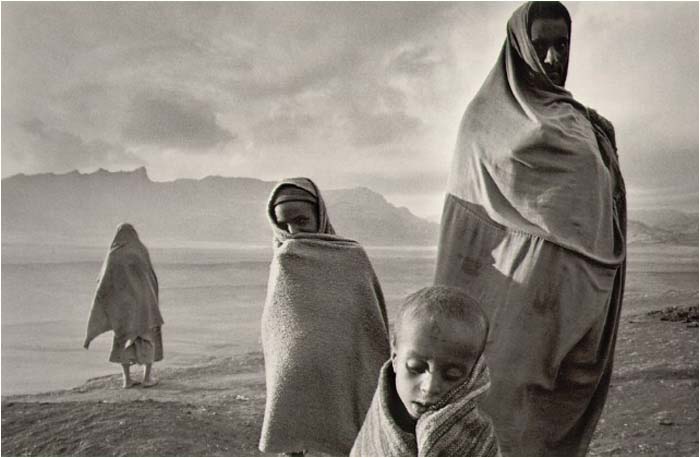
Some of his Photos

You might also like