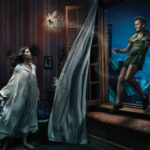
(1951, Lexington, Virginia, USA)
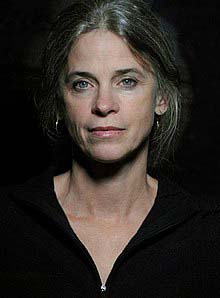 Sally Mann is an American photographer born on May 1, 1951 in Lexington (Virginia), where she still lives with her husband Larry, a lawyer by profession, with whom he had three children: Jessie, Emmett and Virginia, protagonists of some of his best portraits.
She studied photography at the Praestegaard Film School (1971) and the Aegeon School of Fine Arts (1972), among others, graduating in 1974 at Bennington College. His work has attracted attention not only for its technical qualities but also for some controversies unleashed by radical groups, at the end of the 1990s, of conservative Christians in his country who protested against the photographer, David Hamilton and Jock Sturges accusing them of create pornography
Among other institutions, the Metropolitan Museum of New York and the Corcoran Collection have work among their funds.
In July 2001, Sally Mann received the award for Best American Photographer from Time Magazine.
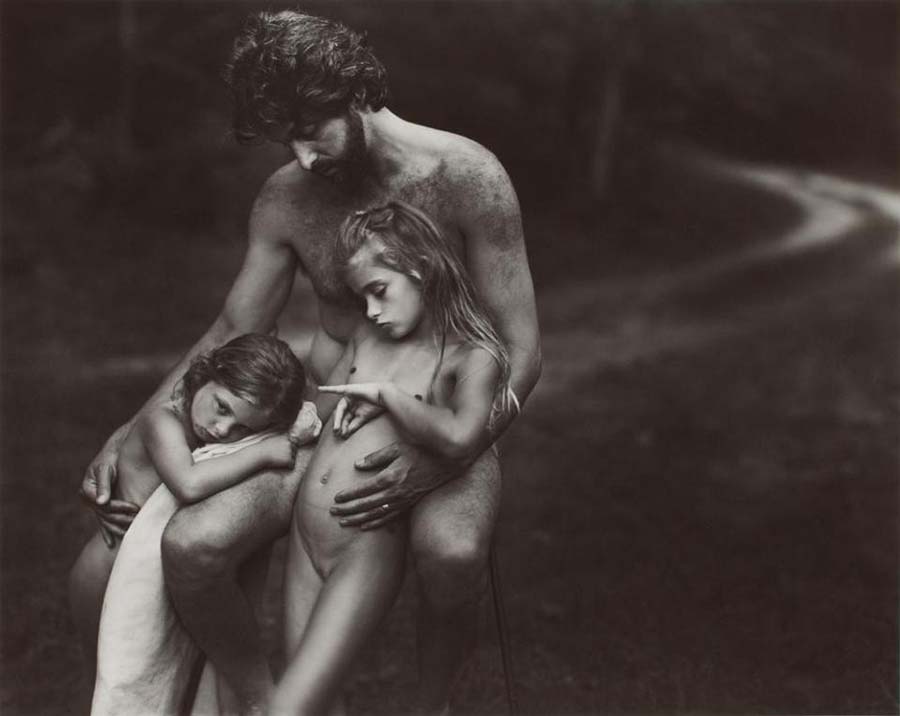
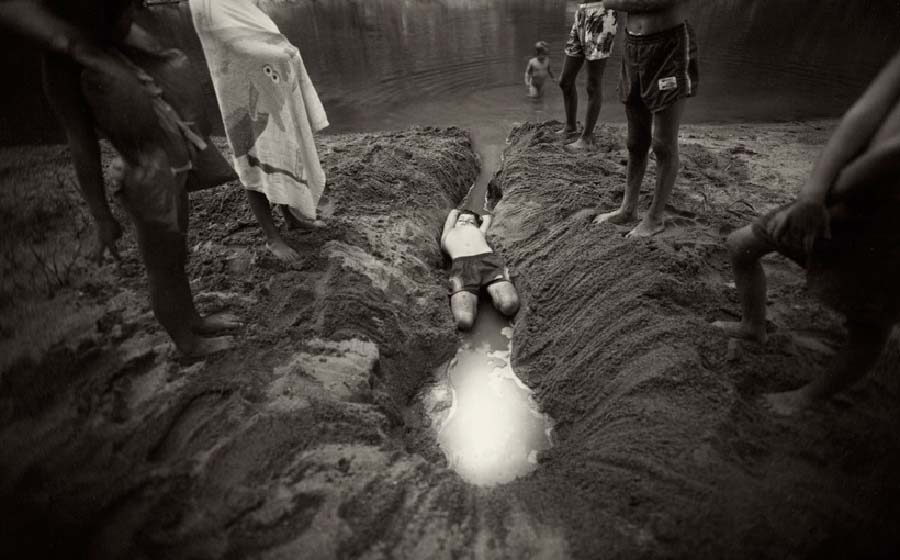
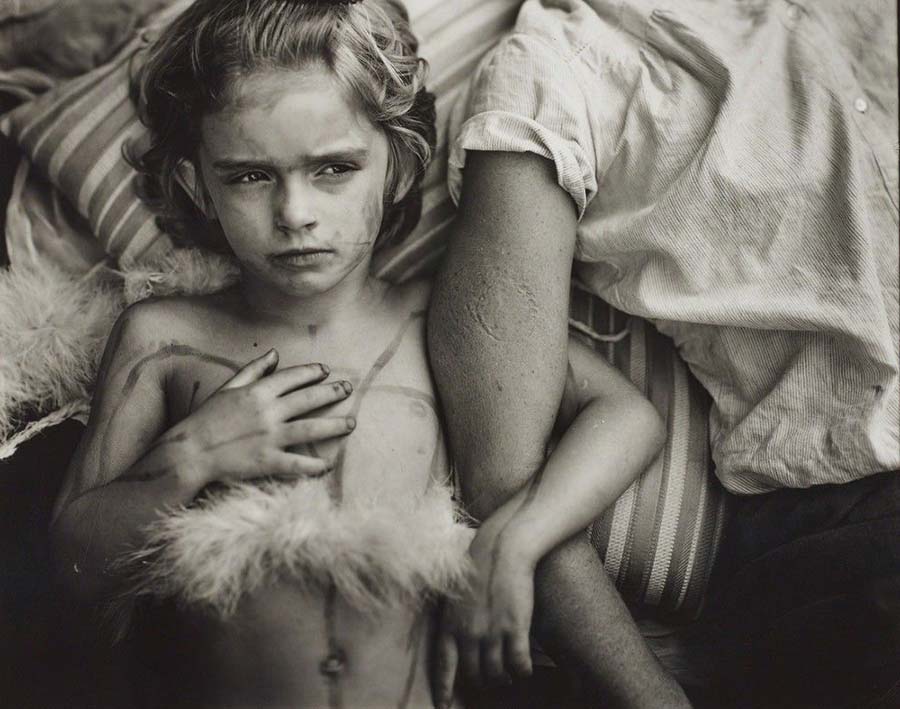
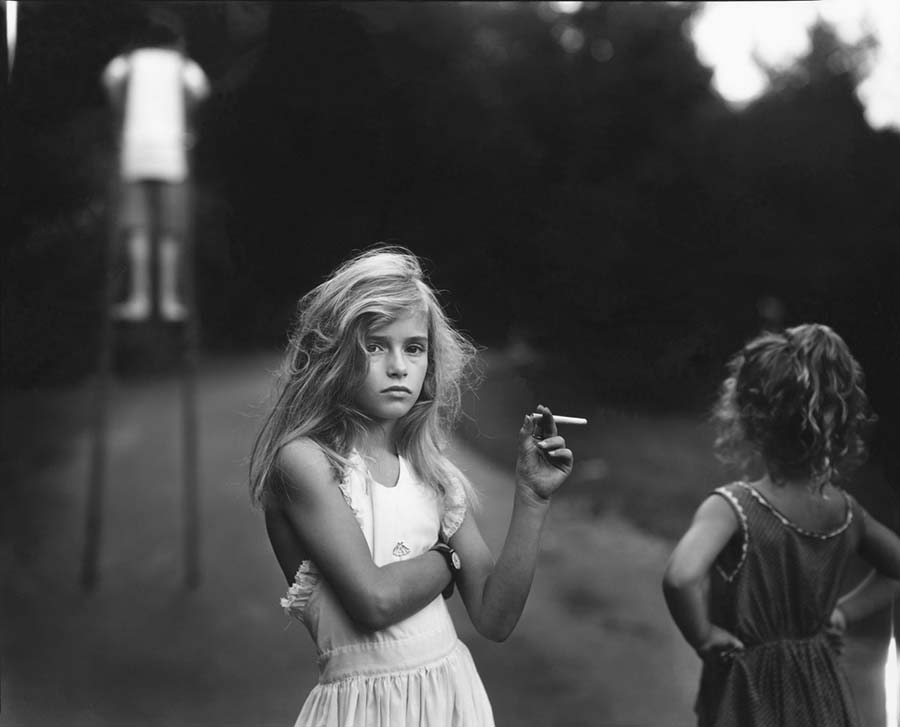
She is one of the most influential contemporary photographers, known for her ability to capture the intimacy, fragility and imperfect beauty of everyday life. His most famous series, Immediate Family (1992), portrays his children in natural and spontaneous scenes, exploring childhood from a poetic yet disturbing perspective. These images, loaded with symbolism and emotion, opened a debate on the boundaries between family privacy and art, placing Mann at the center of international photographic conversation.
Beyond the family portrait, Mann’s work is distinguished by its extremely careful analog technique. He uses large format cameras and traditional processes such as wet collodion, which give his photos a timeless, almost spectral look. This aesthetic choice underlines his interest in memory, mortality and the imprint of time on bodies and landscapes. Their images often have intentional imperfections -chemical stains, blurring, scratches- that reinforce that sense of past, deterioration and evocation.
In recent years, his work has focused especially on the landscape and historical scars of the southern United States, where he was born and grew up. Series such as Deep South and What Remains examine the relationship between territory, history and collective memory, connecting the natural beauty of the landscape with episodes of violence, loss and conflict. Overall, Sally Mann’s work is a profound meditation on human life, its vulnerability and the persistence of the stories we leave behind.
Books
- A Thousand Crossings (The National Gallery of Art & Abrams Books, 2018)
- Remembered Light: Cy Twombly in Lexington (Gagosian & Abrams Books, 2016)
- Hold Still (Little, Brown, 2015)
- Southern Landscape (21st Editions, 2013)
- The Flesh and The Spirit (Aperture, 2010)
- Proud Flesh (Gagosian & Aperture, 2009)
- Sally Mann: Faces (Gagosian, 2006)
- Sally Mann: Photographs and Poetry (21st Editions, 2005)
- Deep South (Bulfinch, 2005)
- What Remains (Bulfinch, 2003)
- Still Time (Aperture, 1994)
- Immediate Family (Aperture, 1992)
- At Twelve (Aperture, 1988)
Links
Some Photos


You might also like