(november, 9, 1924, Zúrick, Switzerland – september, 9, 2019, Inverness, Canada)
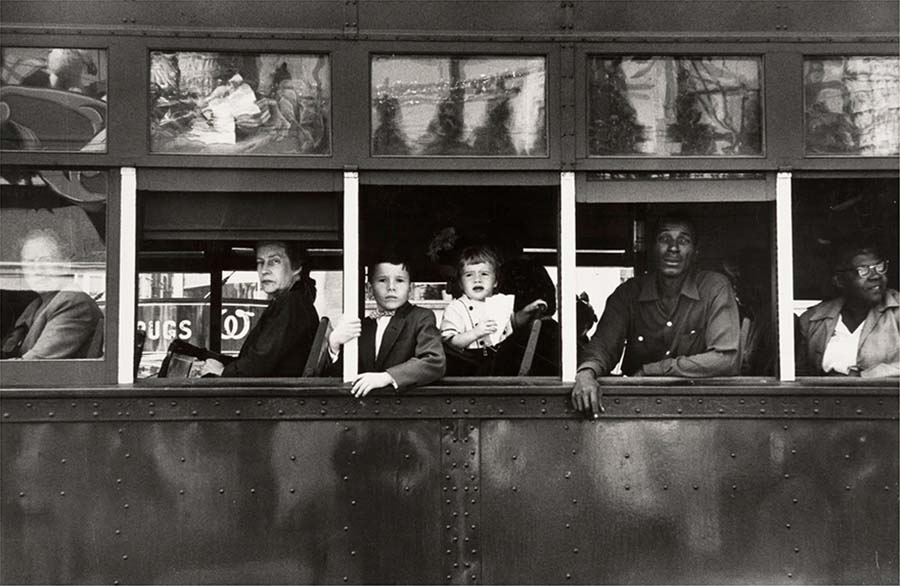
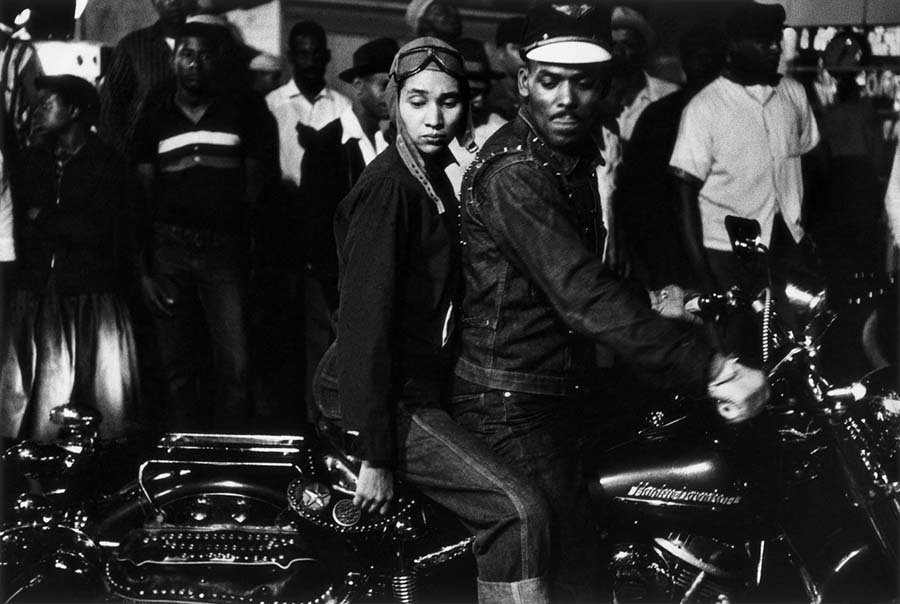
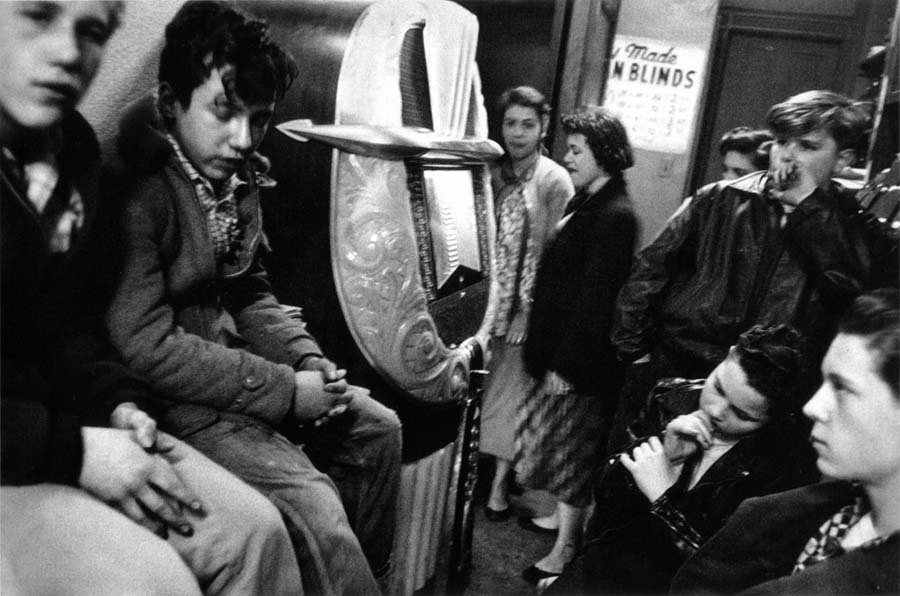
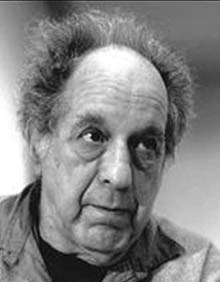 Robert Frank, He was an important American figure in the field of photography and cinema. His most prominent work is the photography book The Americans, published in 1958, which is strongly influenced by the post-war period, and which has led him to be considered a modern Alexis de Tocqueville for his skeptical and fresh from American society seen from a foreign perspective. Frank later expanded his interests to the cinema and experimented with composing and manipulating photographs. In 1996 he received the Hasselblad Foundation International Prize PHotoEspaña Baume et Mercier Prize 2009.
Life and carrer
Frank was born into a wealthy Jewish family in Switzerland. Rosa, Frank’s mother, was of Jewish descent, but her father Hermann had been stateless after World War I and had to apply for Swiss citizenship for Frank and his older brother, Manfred. Although Frank and his family remained safe in Switzerland during World War II, the Nazi threat nevertheless affected their understanding of oppression. He leaned toward photography in part as a way to escape the family business tradition, being trained by some photographers and graphic designers before creating his first photo book in 1946, 40 Photos. Frank immigrated to the United States in 1947, and got a job in New York City as a fashion photographer for Harper’s Bazaar. Soon after, he began traveling in South America and Europe. He published two more books of photographs taken in Peru, and returned to the US in 1950. That year was a momentous one for Frank, who, after meeting Edward Steichen, participated in the 51 American Photographers group presentation at the Museum of Modern Art in New York; He also married a fellow artist, Mary Lockspeiser, with whom he had two children, Andrea and Pablo.
Although he was initially optimistic about the United States, his outlook changed rapidly when he faced the rapid pace of American life and what he saw as an over-emphasis on money. Since then, he began to see the United States as an often sad and lonely place, a perspective that became evident in his later photographic work. Frank’s own dissatisfaction with the excessive control his editors exercised over his work was also a determining factor in his experience. He continued to travel, temporarily moving his family to Paris. In 1953, he returned to New York and continued working as a freelance photojournalist for magazines such as McCall’s, Vogue, and Fortune.
The Americans
With the help of the artist who most influenced him, photographer Walker Evans, Frank received special permission from the John Simon Guggenheim Foundation in 1955 to travel across the United States and photograph society in all strata. He took his family with him on a series of road trips over the subsequent two years, in which he took some 28,000 photographs. Only 83 of these were selected by him for publication in The Americans. Frank’s journey was uneventful. While driving to Arkansas, Frank was arbitrarily imprisoned after being detained by a police officer somewhere in the Deep South, a commissioner indicated that he had an hour to leave the city. The vehicle did not have the proper title and Horvitz was arrested for a short period of time for possession of a stolen car.
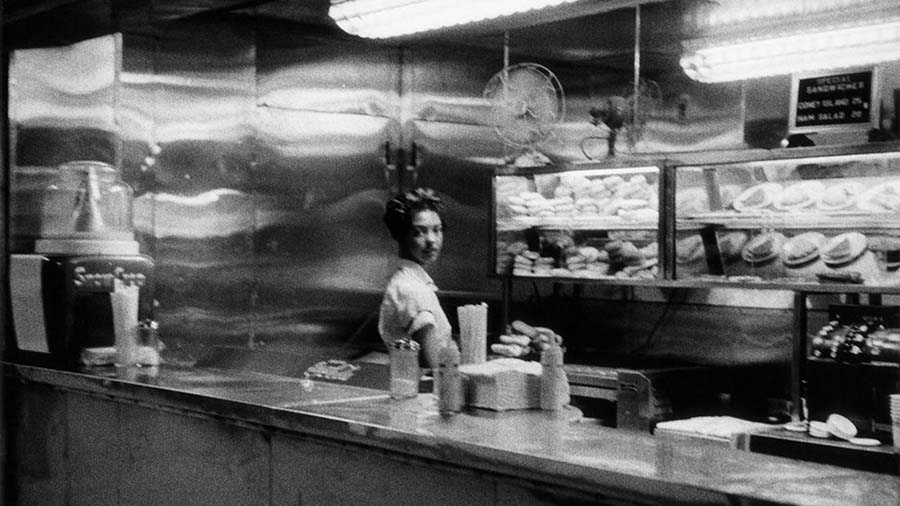
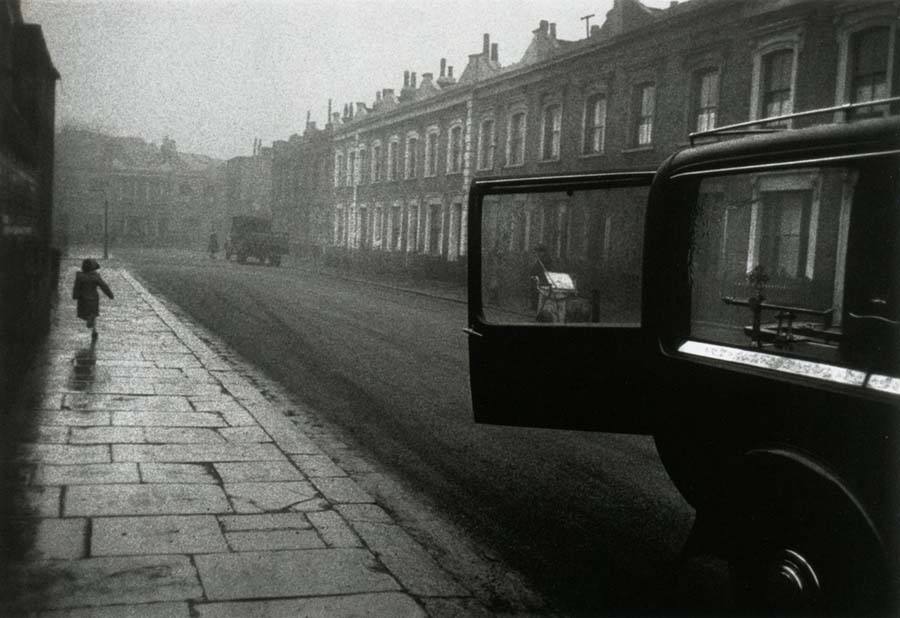
Shortly after returning to New York in 1957, Frank met the writer of the Beat generation, Jack Kerouac, at a party, and showed him some of the photographs taken on his travels. Kerouac immediately told Frank, “Surely I can write something about these photos,” later contributing to the introduction of the American edition of The Americans. Frank also became friends with Allen Ginsberg, and was one of the leading artists to document the Beat subculture, which went hand in hand with Frank’s interest in documenting the contrast between optimism prevailing in the 1950s and racial and gender differences. classes in American society. The irony that Frank saw in American culture undoubtedly influenced his photographic technique, marking a clear contrast compared to most contemporary photojournalists, visible in his unusual style of focus and the use of low light, among other characteristics they deviated from accepted photography techniques.
These differences from contemporary photography standards made it difficult for Frank at first to be published in the United States. Les Americains was first published in 1958 by Robert Delpire in Paris, and later in 1959 in the United States by Grove Press, where it initially received substantial criticism. Popular Photography, for example, classified his images as “considerably opaque, porous, cloudy exposures, distorted horizons, and generally neglected.” Although sales were initially low, the introduction of Kerouac helped raise them in large part because of the popularity of the Beat phenomenon at the time. With the passage of time and through the inspiration of later artists, The Americans became a representative work within photography and the history of American art, being in turn the work with which Frank most identifies. In 1961, Frank presented his first solo exhibition, Robert Frank: Photographer, at the Art Institute of Chicago. It was also presented at the MOMA in New York in 1962. It is available in Spanish, edited by La Fábrica, under the name “The Americans”.
Cinema
By then, however, Frank had moved from photography to focus on filmmaking. Among these was Pull My Daisy from 1959, which was written and narrated by Kerouac and starring Ginsberg and others within the Beat circle. Pull My Daisy was praised for years as an improvisational masterpiece, until Frank co-director Alfred Leslie revealed on November 28, 1968 in a Village Voice article that the film was indeed carefully planned, rehearsed and directed by him and Frank, who filmed the movie with a professional set of lights.
In 1960, Frank remained in the basement of artist Fluxus George Segal while filming Sin of Jesus with a grant from Walter K. Gutman. Isaac Singer’s story was transformed to focus on the life of a young woman who worked on a chicken farm in New Jersey. The film was supposed to be filmed in six weeks in and around New Brunswick, but Frank ended up filming for six months.
His 1972 documentary on the Rolling Stones, Cocksucker Blues, is considered his best known film. The film shows the Stones on their 1972 tour, involved in drug use and group sex. But perhaps the most disturbing thing to the Stones when they saw the final product was the frank way Frank faithfully captured the loneliness and despair of street life. Mick Jagger pointed out to Frank, “It is a fucking good movie, Robert, but if it is shown in America we will never again be allowed in the country.” The Rolling Stones sued to prevent the film from being released, and it was debated whether the copyright on the footage shot lay with Frank or the band. The court resolved the dispute by restricting the screening of the film to be shown no more than 5 times a year and only in the presence of Frank. Frank’s photograph also appeared on the cover of the Rolling Stones’ Exile on Main St. album.
Back to images
Although Frank remained interested in film, he resumed photography in the 1970s with the publication of his second photographic book, Lines of My Hand, in 1972. This work has been described as a “visual autobiography” and consists mostly of personal photographs. None of his later works has had as much notoriety as that achieved with The Americans. Some critics allude to this by the later incorporations of composite images in his works, a decade after Robert Rauschenberg introduced his screen printing compositions and in contrast to The Americans, Frank’s later images simply did not match established techniques and practices for that time.
Frank and Mary separated in 1969. He remarried in 1971 to the sculptor June Leaf, then moving to the Mabou community on Cape Breton Island, Nova Scotia. In 1974 the tragedy touched him when his daughter Andrea died in a plane crash in Tikal, Guatemala. A little earlier, her son Pablo was hospitalized and diagnosed with schizophrenia. Many of Frank’s subsequent works showed the impact the loss of his daughter and his son’s ongoing battle with his mental illness had had on his life. In 1995 he founded the Andrea Frank Foundation that provided loans to artists.
Since moving to Nova Scotia, Frank has acquired a reputation as a reclusive and lonely man (particularly after his daughter’s death), rejecting most proposals for interviews and public appearances. He has continued to accept eclectic assignments as a photographer and music video director for artists such as New Order and Patti Smith. Frank continues to make films as well as images, and has helped organize various retrospectives of his art. In 1994, the National Gallery of Art in Washington presented the most comprehensive retrospective exhibition of his work to date, under the name of Moving Out. He is currently represented by the Pace / MacGill Gallery in New York. In 2007 Robert Frank received the PHotoEspaña Baume et Mercier award from the Festival President Alberto Anaut. PHotoEspaña recognized the career of this great photographer.
Some of his Photos

You might also like