(May, 15, 1923, NYC, USA – October, 1, 2004 San Antonio, Texas, USA )
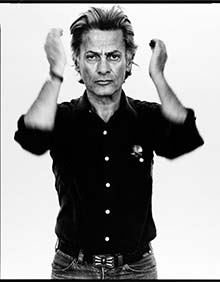 Richard Avedon He was an American photographer. An obituary published by The New York Times stated that: his fashion photographs and portraits had helped define, in the United States, during the last half century, the image of beauty, elegance and culture.
Avedon was born in New York City to a Jewish family. He was the only son of Jacob Israel Avedon, a Russian-born immigrant who owned a clothing store on Fifth Avenue, 2 His mother was Anna, who belonged to a family that owns a textile manufacturing company.1 He attended DeWitt Clinton College in the Bronx, where he worked in the Magpie school newspaper with writer James Baldwin from 1937 to 1940.3 After attending Columbia University for a time, he began his career as a photographer, working for the Merchant Marine in 1942, taking identifying photographs of crew members. These photographs were taken with a Rolleiflex camera that his father had given him as a parting gift. From 1944 to 1950, he studied with Alexey Brodovitch in his laboratory at the New School for Social Research.
Professional career
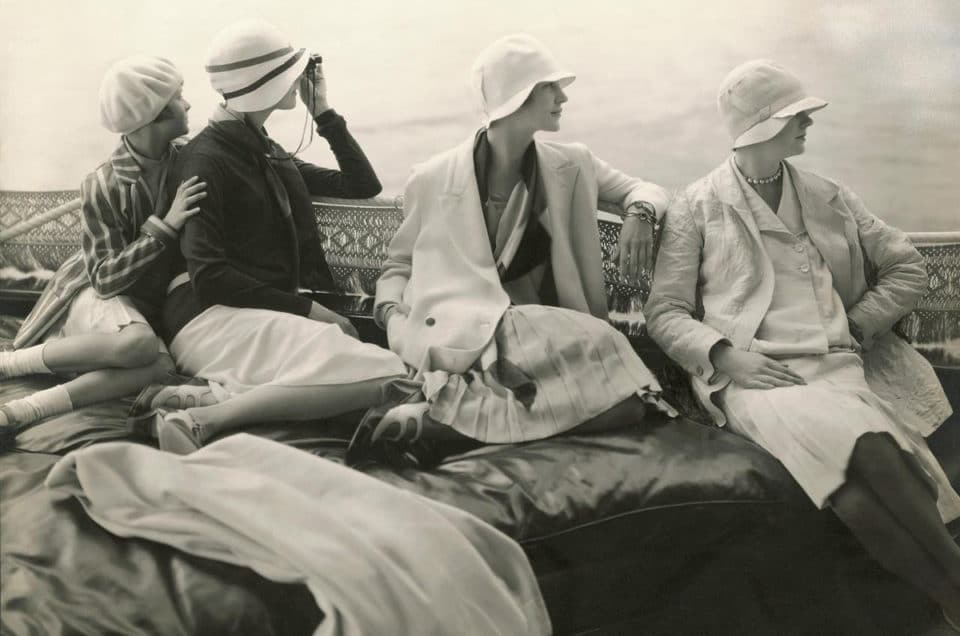
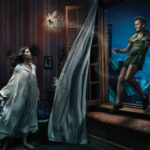
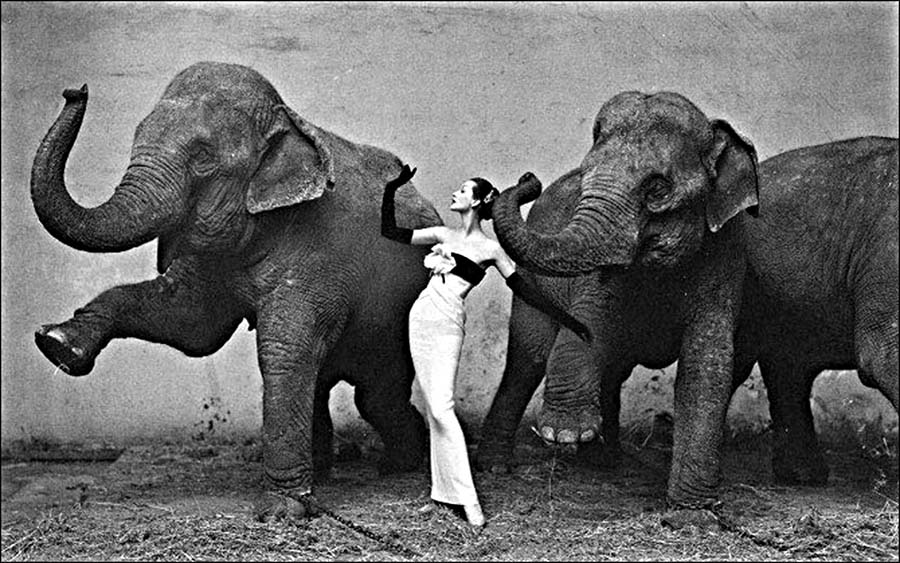
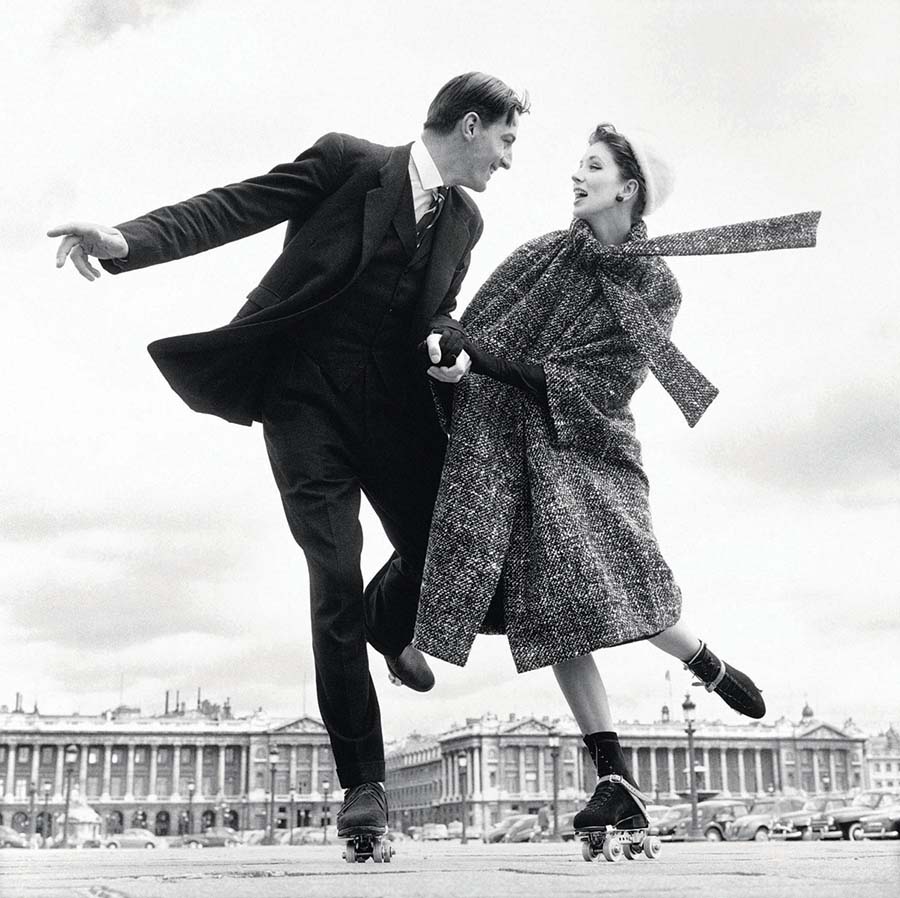
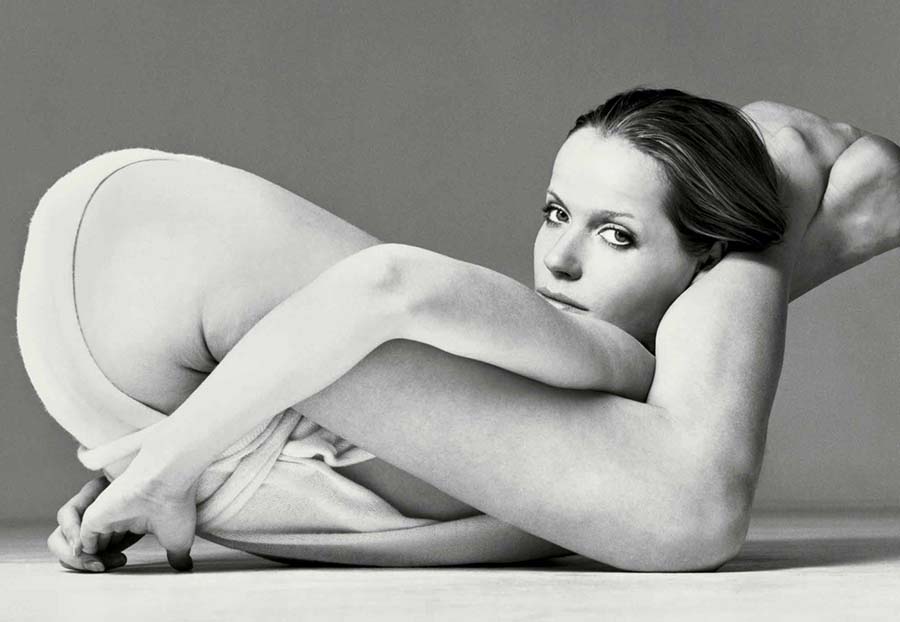
Reputed fashion photographer and great portraitist, he began his professional career in the 1950s doing splendid fashion work for Harper’s Bazaar magazine, where he ended up becoming Head of Photography. Subsequently, he would also collaborate with other magazines such as Vogue, Life and Look. Without a doubt, he was the great fashion photographer during the 1960s and 70s. In his works he managed to elevate fashion photography to the level of the artistic, getting rid of the myth that models should project indifference or submission. On the contrary, in their photographs the models were free and creative characters in their gestures within dynamic scenarios and under previously decided compositional schemes.
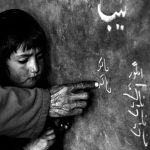
In the 1960s, Avedon revealed himself as an artist committed to the social concerns of his time. During the year of 1963 he photographed the Civil Rights Movement in the southern United States, collaborating in the following years with James Baldwin in the book Nothing personal. In the late 1960s and early 1970s, Avedon reported on military leaders and victims of the Vietnam War and anti-war demonstrations in the United States for the New York Times. On Christmas 1989-1990 he traveled to Germany to document a city divided into two different worlds the night the Berlin Wall fell.
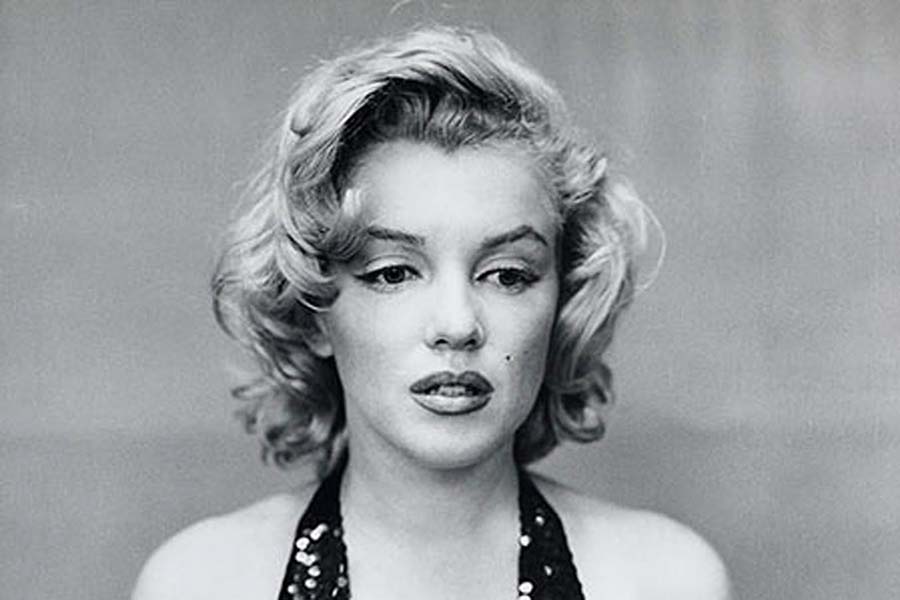
His apparently simple but deeply psychological portraits of famous and unknown personalities posing in front of an immaculate white background, show a careful photographer capable of capturing on photographic paper unexpected features of the faces of characters of the magnitude of Truman Capote, Henry Miller, Humphrey Bogart or Marilyn Monroe, among many others. His method was simple but effective, the emotional defeat of the opponent photographed through long and tired sessions of up to four hours. Thus naked, the portrayed and defenseless was able to show his most sincere personality.
In 1979 he began what was to become one of his most important jobs. Commissioned by the Amon Carter Museum in Fort Worth, Texas, Avedon spent five years touring the western United States to document people who would never write their country’s history. In this play, titled In the American West, it introduces us to farmers, miners, homeless people, prostitutes, housewives, prisoners, rodeo cowboys, or small office employees, etc. in large format photographs taken in daylight, outdoors and as always, against a white background. There is nothing in them of the American dream or the promised land, but they are portraits of individuals who have been observed and artistically elevated by Avedon’s camera through a sober composition, thus achieving considerable expressive force. At the end of the project, Avedon had traveled a total of 189 towns in 17 states; he had photographed 752 people using around 17,000 film plates. From this collection, he chose 123 portraits that would make up the series In the American West 1979 – 1984.
In addition to the large format used for his fashion photographs or portraits, he developed a parallel work, using the universal approach, which reflects his most personal experiences, such as trips or family memories. Something very deep underlies all of Avedon’s work and, however, it has not always been successful to specify in the works carried out around his figure. It is a sincere concern, but sometimes elegantly obsessive. Time, old age and its tensions, turns out to be the fundamental reason in Avedon’s work. We see in his art how he speaks directly to us about the passage of time and its influence on the human being, and, of course, about the path to death. It is those decontextualized portraits that appear before the camera without makeup, tired or sad, as they were at the time, that clearly denote this concern. The end of his book Portraits (1976), for example, culminates tremendously but masterfully with a series of seven photographs of his father gradually aging until he seems to have integrated into the light that surrounds him.
On September 25, 2004 Avedon suffered a cerebral hemorrhage in San Antonio, Texas, while he was in a photo shoot for a project commissioned by The New Yorker magazine, which was titled “On democracy”, and focused in the 2004 electoral process in the United States; These were portraits of candidates, delegates from national conventions, among others involved in the subject. He died in the same city on October 1 of that year as a result of medical complications. In 1991 he received the Hasselblad Foundation International Prize
Some of his Photos

You might also like