(1923, Tampico, Tamaulipas – 1986, Mexico City)
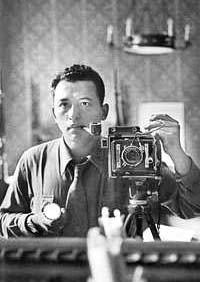 Ignacio López Bocanegra, better known as Nacho López (Tampico, Tamaulipas, 1923 – Mexico City, 1986) was a Mexican photographer, an important figure in photojournalism in that country in the 20th century.
Despite the current of that time, he almost rejected the creation of images that made Mexico exotic and preferred the photography of ordinary people from Mexico City over those of the political and social elite. He is credited with being the first in Mexico to work with photographic series, which he called “photo essays” made to be published in weekly pictorial magazines in the country. About half of his photographs were events organized by López designed to capture the reactions of those present at the event. Although he was an active photojournalist for less than a decade in the 1950s, he was influential for the succeeding generations of photojournalists, with a collection of approximately 33,000 images now in the Nacho López Fund of the National Photo Library of Mexico.
Biography
Nacho López was born in Tampico, Tamaulipas, Mexico in 1923. He studied at the Institute of Arts and Cinematographic Sciences from 1945 to 1947. He mainly learned photography from Manuel Álvarez Bravo along with his influences from Francisco Monterde, Ricardo Razaetti, film director Alejandro Galindo and the writer Xavier Villaurrutia.
He began his photographic career at a time when most of the photographers were for the politics of Mexico and for the desire to create a more unified Mexican identity, something he learned to reject by Alvaréz Bravo. His other interests included architecture, ethnography, 1960s jazz, and contemporary dance, marrying two contemporary dancers during his lifetime.
He died suddenly in 1986 in Mexico City, leaving her daughter Citlali Lopez, an anthropologist, alone.
Photographic trajectory
His first photograph was of Lazarin del Toro Street in Mexico City in 1933. Earlier in his career, he taught photographic techniques at the Central University of Venezuela for a short time, where he also had his first major exhibition of his work. in 1948. His first photographic work included subjects such as Calle 15 de Septiembre, dancers, masks and carnivals, as well as teacher strikes, Huicholes and Coras.
His main job as a photographer was between 1949 and 1955, when he did photojournalism for Mexican magazines such as Pulso, Mañana, Hoy, Rotofoto, Present and Always! 3 6 At that time, magazines with images were the main source of cultural information And if he did work he gave him the most creative flexibility. López wanted to be a film director and producer and used his years as a photojournalist to illustrate some of his ideas for scripts.2 He focused more on everyday life with about half of his photos on that subject. With a penchant for social criticism, his works focused more on the negative aspects of economic development in Mexico at that time and the official claims of a unified Mexican identity.
By 1957, López found photojournalism very restricted and focused on working with documentaries, new stories, and publicity.8 Over the next ten years he made a number of award-winning documentaries and commercials and a film called Los Hombres cultures in 1972.5 Lopez was also the Cameraman for the short film We are all Mexicans, sponsored by the National Indigenous Institute and directed by José Arenas. Despite some success making films, he is currently remembered for his 50s photojournalism, even though he has been on the field for a brief period. Little is written about his film career, and while López wrote about his experiences as a photographer, he did not write about cinematographic ones.
In the 70s, he stopped making movies, returning to photography but not to photojournalism. He never stopped exhibiting his photographic work completely, participating in group exhibitions of a group called “Los Interioristas” in the 60s. However, in the 70s, he returned to photography, with a contract from the National Indigenous Institute. Many of these photographs continue to be used by the Ministry of Foreign Affairs.
In the last years of his career, he became a teacher of photography and a photographic critic. In the 80s, he taught photography at the University Center for Cinematographic Studies of the National Autonomous University of Mexico and the Veracruzana University, teaching many who would be part of the movement of new photojournalists. He published an image book called “Yo, el Ciudadano” that was first published in an important publication of Latin American images called “Río de luz.” Another important publication of his work was in the magazine Artes de México with images related to Mexico City.
His photography never focused on “hard news” despite a significant number of events that happened at that time such as the March of 1951 miners’ famine and the 1968 student movement. Only one event, the worker strikes in 1958 and 1959, are on file, but the photographs are considered worthless.11 He rarely photographed celebrities and politicians with the notable exceptions of the Rafael Ávila ceremony in which he became governor. from Puebla and Anastasio Somoza’s wedding in Nicaragua. This is from a total of more than forty photo essays in which he worked his entire career.
Shortly before his death, he collected a collection of approximately 30,000 negatives, 3,000 and three films to donate to the federal government photographic archives located in Pachuca, Hidalgo, currently kept as the Nacho López Fund. Her daughter has since worked to promote the preservation and research of her father’s work, leading him to international recognition in the 90s and to a greater exhibition of his work in Mexico City in 2008, more than twenty years after his death.
Photographic style
His career as a photojournalist was short, but López’s influence has been decisive.5 His expression was recognized along with his preference for unusual themes of the time and his unexpected twists on more routine stories. This made him the most influential journalist photographer from the middle of the 20th century until the end of it.13 7 When López studied and began his career from the late 30s to the early 50s, there were two major trends in Mexican photography. The first was political, with the aim of creating a unified Mexican identity, minimizing regional and ethnic differences, as well as making the country’s political and social elite look good.6 14 This was true for weekly newspapers and magazines like Hoy, Mañana. and always! These were the main intentions of spreading cultural information at the time.15 Images of workers, indigenous people and other ordinary people were notably lacking.14 This was reinforced through state policies, rewarding publications with acceptable content and punishing those that were not. There were full articles in magazines dedicated to the current president and favored industries, sometimes founded on public monkeys.
The second was the tendency of photographers from the 19th to 20th century to portray Mexico as an exotic entity, often with images of stereotypes from foreign markets. Images focused on rural areas with stereotypical images of indigenous people, sometimes even with women with bare chests as a form of soft pornography. López’s main influences such as Manuel Alvarez Bravo and Tina Modotti were determined to change this.16 Nacho Lopez studied with Alvarez Bravo and another prominent photographer, Héctor García in the 1940s, making them take this picturesque stance, but with more social criticism. Another important influence for López in this direction was from the Mayo brothers of Spain. These influences helped him develop a kind of “modernist objectivity” and ethics for his work with magazines in stark contrast to the emphasis on the exotic and political pressures.
López’s work for Mexico City in the 1950s was radical. It contained outstanding stories and picturesque essays with social criticism, formality, and a narrative focus.14 His best-known photos focused mostly on everyday life in Mexico City in the 1950s, with photos of people working on stagecoaches, students, billiard players. street and workshop workers, indigenous people and mainly in places like pulque bars, clubs, the street and prisons. In addition to Alvarez Bravo and Modotti, their work has also been compared to that of Dorothea Lange, Henri Cartier-Bresson, and Edward Weston, all against the exotic in Mexican photography.18 Other influences include [Francisco Monterde]], Ricardo Razaetti, the film director Alejandro Galindo and the writer Xavier Villaurrutia. He stated that “Photography was not intended to adorn the walls as art, but apart from making obvious the ancestral cruelty of man against man, it was the greatness of his love for things and everyday things.”
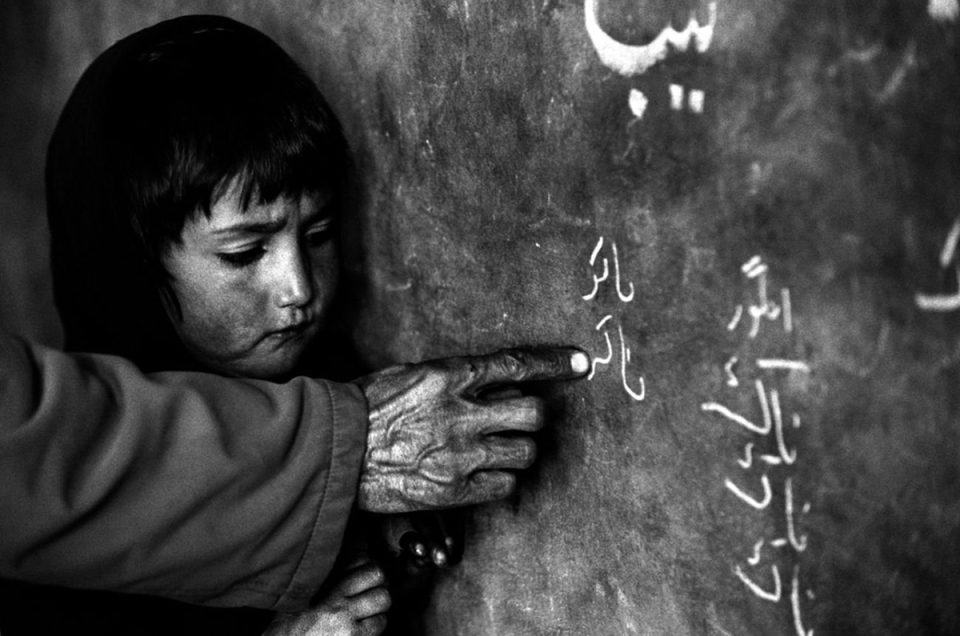
López’s work introduced generally unambiguous social commentary. The most powerful photographic essays tended to focus on the oppression of prisoners, neighborhood dwellers, poor children, illiterates, and socioeconomically marginalized. However, these photos were taken not to be viewed by their subjects or by social classes, but for middle-class readers of illustrated magazines. He worked to show the hidden side of what had been promoted as a “miraculous” modernization of Mexico. Because he worked mainly for magazines, he had more creative autonomy than photographers who worked for newspapers. This allowed him to develop the photo essay format, and he was the first Mexican journalist to significantly expand the notion of being an author, writing the titles and other texts that accompanied his images.
He was credited with being the first person in Mexico to create photographic series. These include “Mexico used to have a drink at two in the afternoon” and “Philosophers of the news”, which were unusual topics. Even when he did familiar themes like the annual pilgrimage to the Basilica de Guadalupe in Mexico City in December, he focused on different things like what the pilgrims ate or drank.
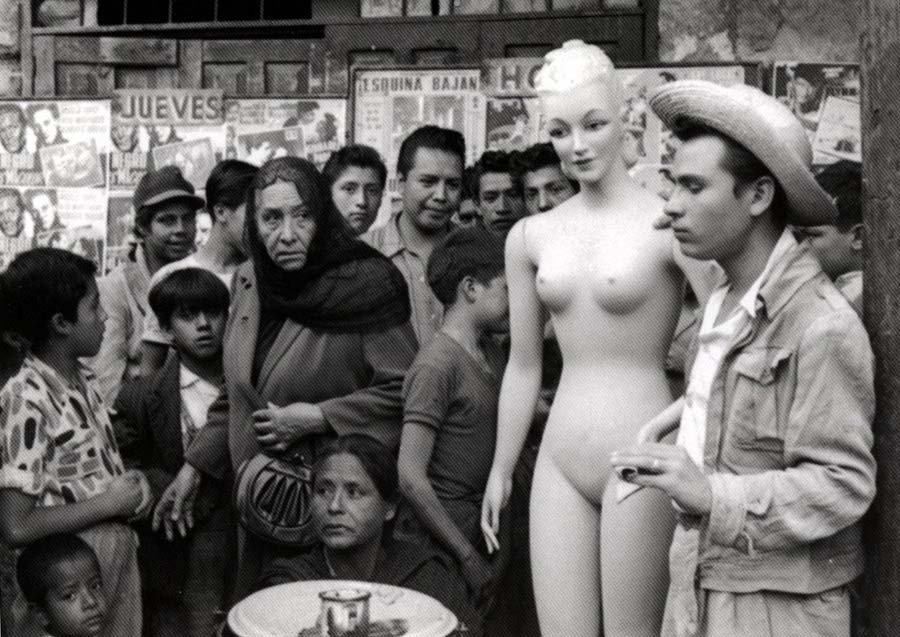
About half of his photographic work, including photo essays, were situations created by the photographer, capturing images of passersby as they encountered them. The most famous photo of this type is “Beautiful woman part plaza by Madero” in 1953. This photo was the result of a woman with a very narrow waist, actually an actress hired by López, walking in the center of Mexico City and in other places so that López could photograph the reactions of those present. Another photograph of this type is the so-called “Venus is going to party” which is a series of photographs of a naked mannequin loaded by workers and photographed in different locations and situations.
Some of López’s photo essays were compiled from his personal archive of unpublished images. An example of this method is “La Calle Lee”, a photo essay dedicated to acts of people reading in various socioeconomic backgrounds and in various situations. According to historian John Mraz, his most critical photo essay was called “Only the Humble Go to Hell,” published in Always! in 1954, but who also deleted some of his photos. The “Valle de Mezquital” series consists of thirty photographs of people and landscapes of the Mezquital Valley in the state of Hidalgo, showing the beauty and poverty of the area. A last compilation of photographs he made was called “photopoemmatics,” translated as “photo poems,” which were poems and photos together. One of these photopoematics includes “Sleep: I have you hidden in my remote dream.”
Bibliography
- Mraz, John (2003). Nacho Lopez, Mexican Photographer. Minneapolis, MN: University of Minnesota Press.
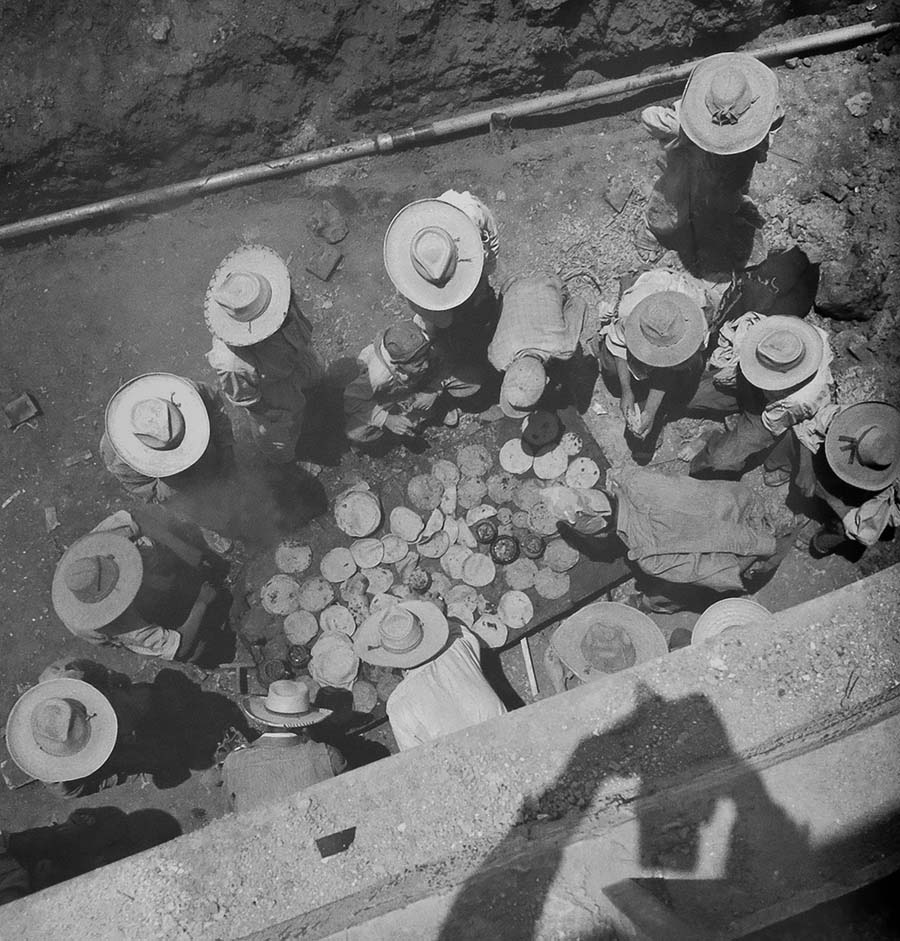
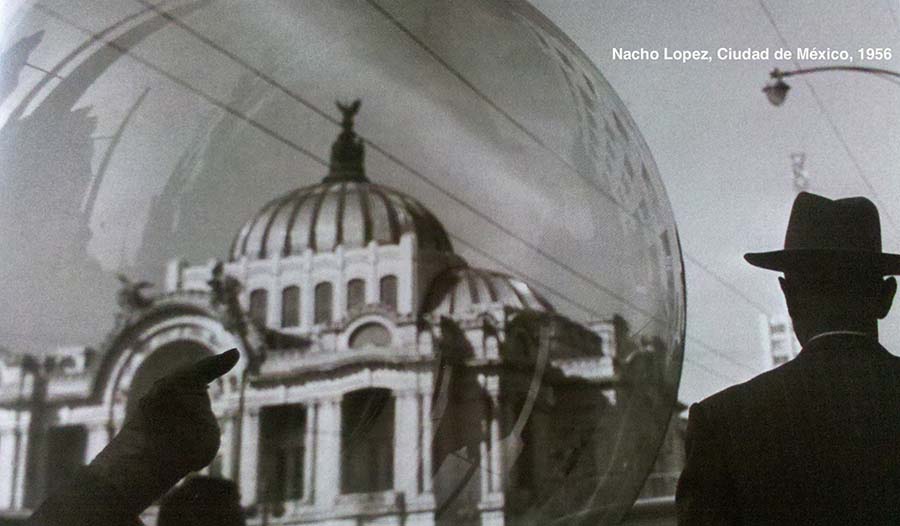
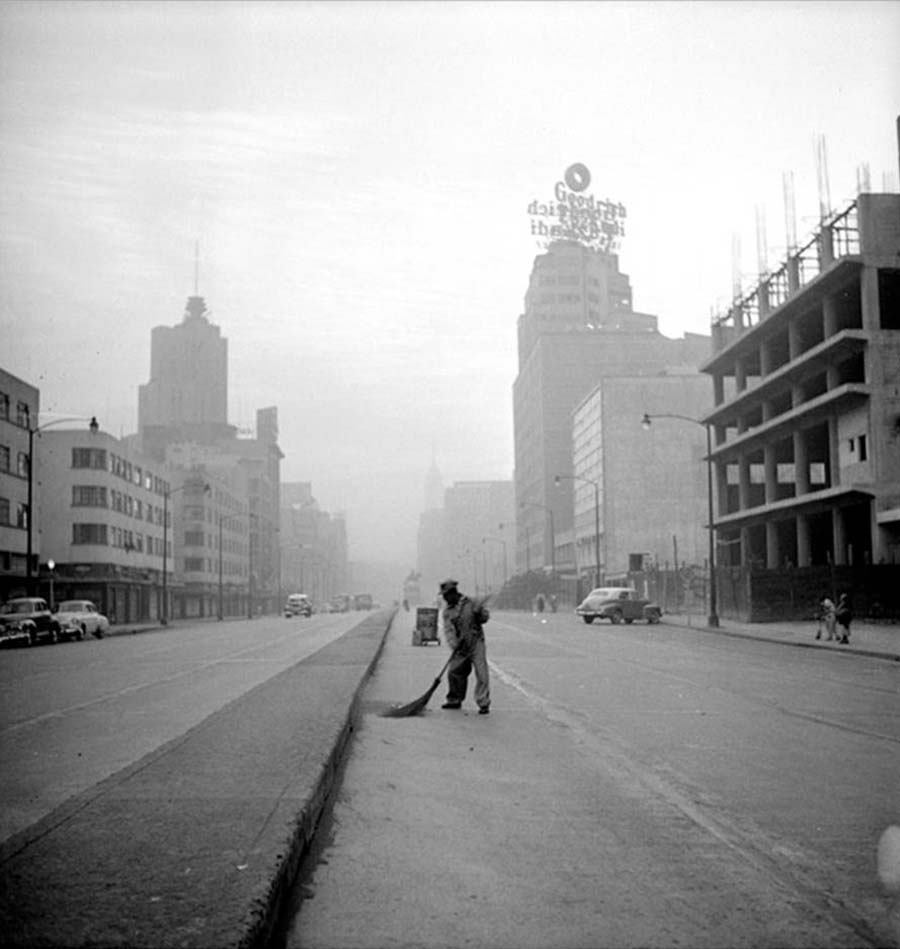
Some of his Photos


You might also like