( Praga, Czechoslovakia, may, 13, 1935 )
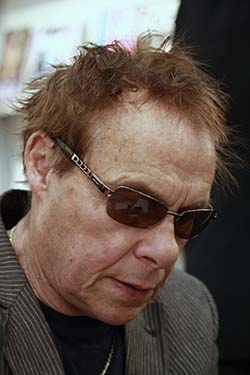 Jan Saudek is a photographer and plastic artist specialized in the nude.
Saudek’s father was Jewish and this added to his Slavic (Czech) heritage caused his family to be targeted by the Nazis. Many members of his family died in the Theresienstadt concentration camp during World War II. Jan and his brother Karel were held in a concentration camp for children located near the current border between Poland and the Czech Republic. His father Gustav was deported to the Theresienstadt ghetto in February 1945. Both sons and their father survived the war.
He obtained his first camera, a Kodak Baby Brownie, in 1950 about which Saudek himself said: “the only thing that can be done with this camera is to load the film, press the button and take the photo; and that is exactly what I have done until 1963 ”.
In 1951 he colors a photo, which his mother shows to the family doctor. He deemed her absolutely bad, kitsch and in an old-fashioned style, which discourages Saudek to continue photography for a while. Paradoxically, it will be these manually colored black and white photographs that characterize and make her work internationally recognizable today.
He was an apprentice photographer and in 1952 he started working in a printing press until 1983. In 1959 he started using a more advanced camera: Flexaret 6×6, which was a gift from his then wife, Marie. He is also interested in painting and drawing. After completing his military service, in 1963 he was inspired, thanks to the catalog of the Edward Steichen Family of Man exhibition, to try to become a serious photographer.
Then he decides that what he really wants is to dedicate himself to photography and that his inspiration is exclusively the people with whom he has romantically linked. Later, he will affirm that with his work what he tries is “to capture all the things that I know and love, but above all I would like to leave a trace of the time in which I have lived”. Steichen’s book motivates him to exhibit for the first time in Prague.
In 1969 he traveled to the United States where art curator Hugh Edwards encouraged him to continue his artistic work and at Solo’s Bloomington University in Indiana he exhibited for the first time alone.
Upon returning to Prague, he is forced to work clandestinely in a basement, to avoid the attention of the secret police, because in his work he dealt with issues of personal erotic freedom and used implicitly political symbols of corruption and innocence. . Starting in the late 1970s, he began to be recognized in the West as the best Czech photographer. In 1983 the first book of his work was published in the English-speaking world.
The same year he finally becomes a freelance photographer. In recognition of Saudek’s artistic career, the Communist authorities allowed him in 1984 to quit his job at the printing press and to join the Czechoslovak Visual Artists Foundation, which was equivalent to his professional recognition as an artist.
In 1987 the files of his negatives were confiscated by the police, but were later returned to him. In 1990 he was appointed Knight of Arts and Letters by the French Ministry of Culture and in 2006 he was awarded in his own country with the Artis Bohemiae Amicis Prize together with Milan Kundera and Vladimír Körner for contributing to the artistic reputation of the Czech Republic.
Saudek currently lives and works in Prague. His brother Karel Saudek is also an artist and is now the best-known Czech graphic novelist.
Work
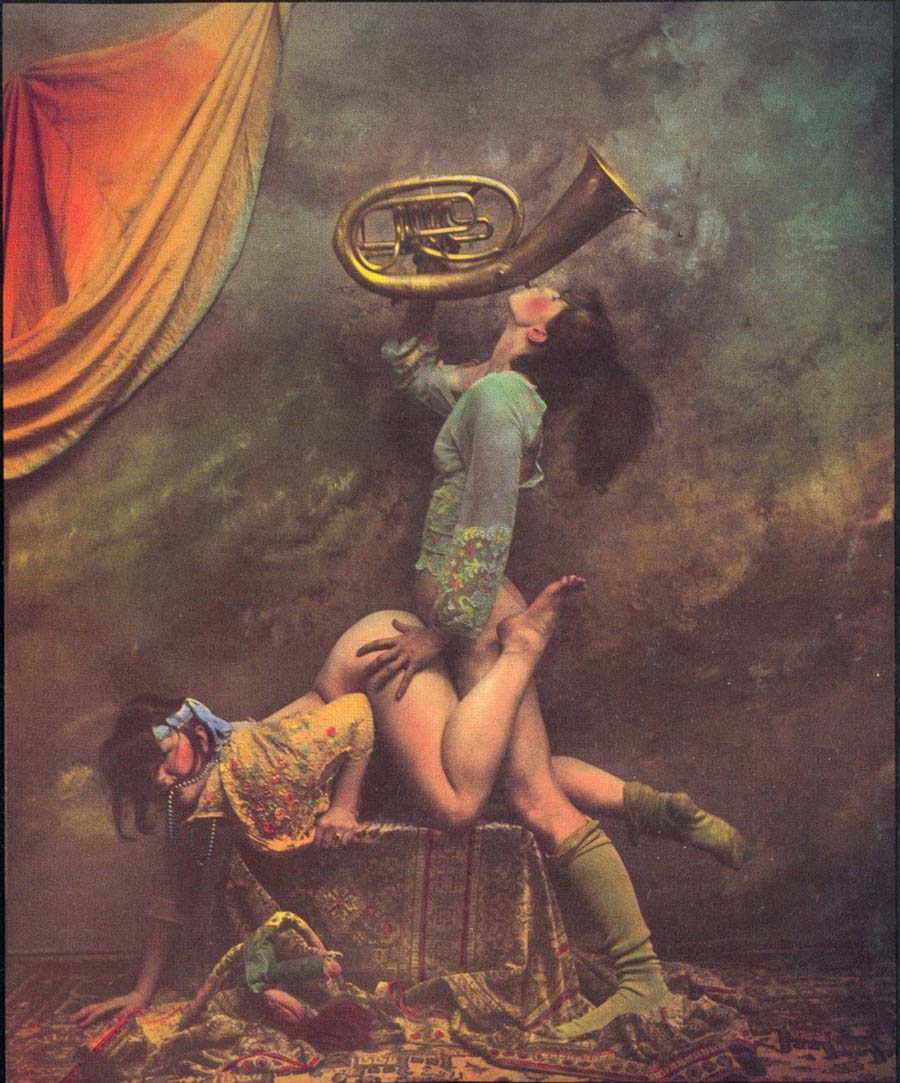
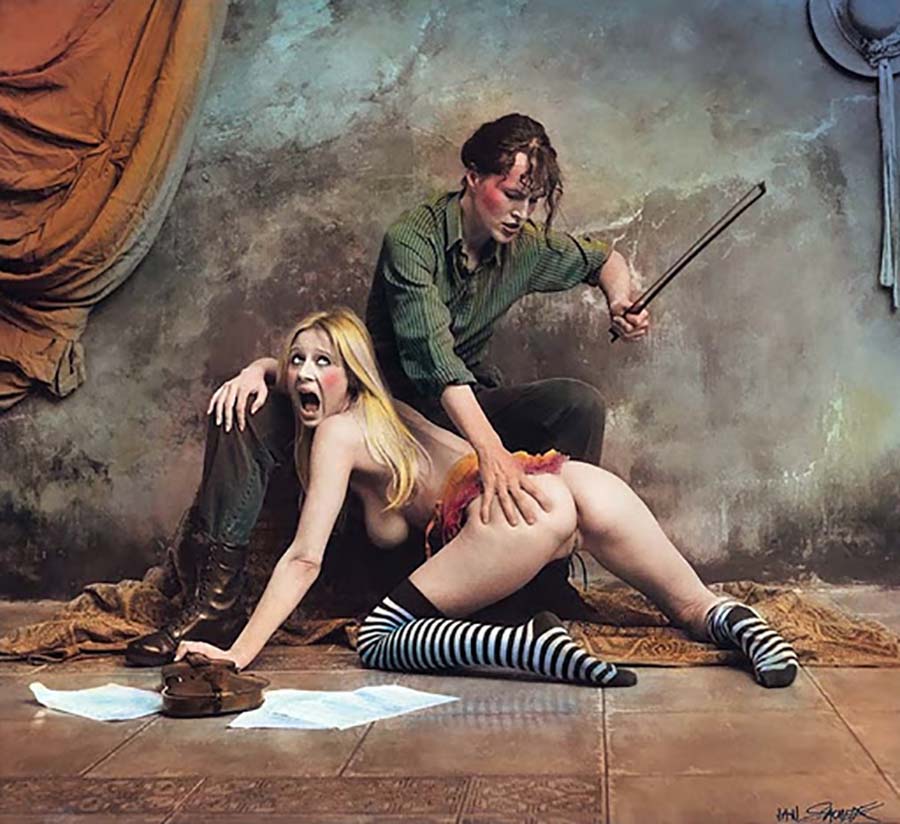
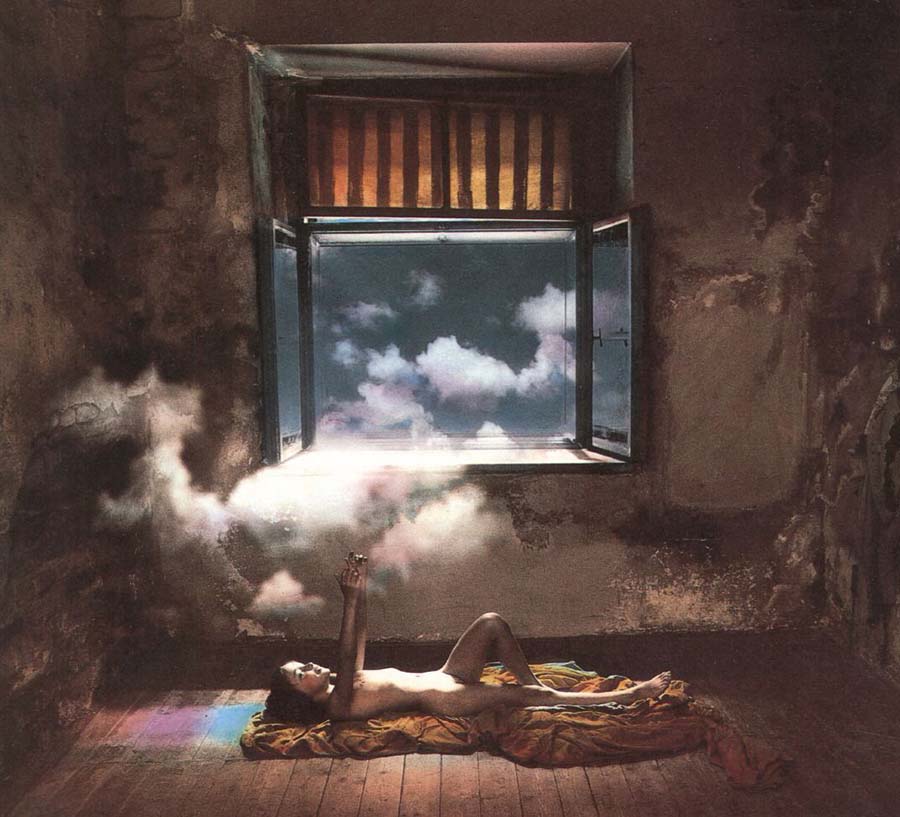
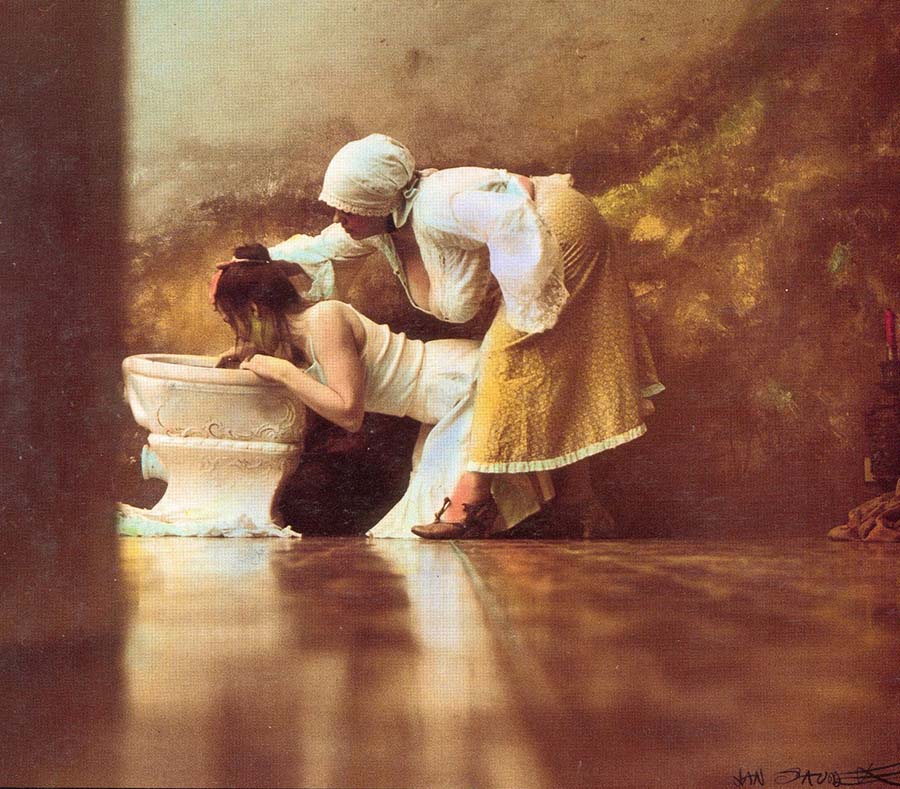
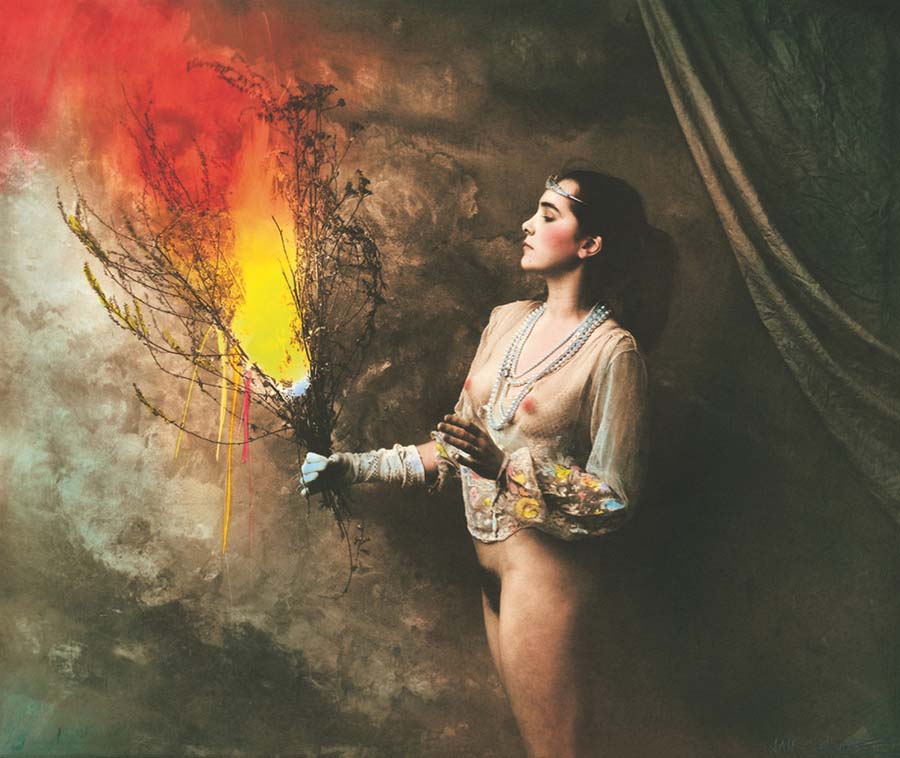
His best-known work is to hand-colorize his photographs, of dreamlike pictorial worlds, often inhabited by nude or semi-nude figures surrounded by plaster walls or painted curtains, often reusing identical elements (eg, a cloudy sky or a view of the Charles Bridge from Prague). In this the works of the studio and tableaux of the erotic photographers of the mid-nineteenth century are echoed, as well as the works of the painter Balthus and the work of Bernard Faucon. His early artistic photography is characterized by his evocation of childhood. Later his works often portray the evolution from child to adult (re-photographing the same composition / pose, and with the same subjects for many years). Religious reasons or the ambiguity between men and women have also been some of Jan Saudek’s recurring themes. His work has been the subject of censorship attempts in the West during the 1990s.
Some of Jan Saudek’s works have entered popular culture in the West, used as covers for the albums of Anorexia Nervosa (New Obscurantis Order), Soul Asylum (Grave Dancers Union), Daniel Lanois (For the Beauty of Wynona), and Beautiful South (Welcome to the Beautiful South).
Jan Saudek’s photography: Black Sheep & White Crow, featuring an unprofessional half-naked girl withdrew from the Ballarat International Photo Biennial on the eve of its inauguration on August 21, 2011, following claims of child prostitution.
Links
- Wikimedia Commons Jan Saudek.
- Oficial Website
Some of his photos


You might also like