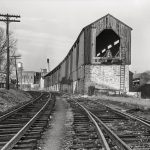
(Würzburg, Germany, june 22 1897 – september 27, 1966)
 Albert Renger-Patzsch was a German photographer assigned to the New Objectivity.
He studied chemistry in Dresden, beginning in photography, of which he taught at the Folkwangschule in Essen. He specialized in advertising photography, publishing several books on the technical and industrial world.
The style of Renger-Patzsch was objective and precise, distancing itself from the diverse avant-garde tendencies of the time. His works are of great accuracy and precision, defending the craftsmanship of photography against the experimentation of the most avant-garde photographers.
After the Second World War he retired to Wamel, a small village near Soest, where he devoted himself to landscape photography and architecture. In 1993 the Ludwig Museum in Cologne dedicated a retrospective to him.
To analyze the work of Albert Renger-Patzsch, is to confirm that his photographs are perfect. Try the subject that you try, all the photographs have a great internal balance and a careful composition.
Throughout his life he covered, in a recurring manner, almost all areas of photography: nature, the industrialization of society, portraiture, the urban landscape. In all cases, the same perfection. With his work he shows that any subject can be developed with photography and that, in all cases, the result can have an aesthetic quality.
It corresponded to him to live a time of intense changes, the years 20, 30 and 40 of the XX Century. He had contact with a large number of intellectuals, writers, architects, painters and photographers. But knowing all the trends of the time did not follow any clearly. He had his own photographic vision.
His photographs seem to say that every work of nature or man has a perfect order. Every detail is present to indicate this perfection. Everything is beautiful. Everything keeps an order.
On the one hand it reflects the magical beauty of material things: wood, stone, metal. And on the other the beautiful image of the dynamism of the machines in full work.
Although in some cases his photography may reflect the aggression of the industry on nature, this criticism is hidden by the formal beauty of the shots.
His photographs of the industrial complexes made in the late 40s and 50s are really an idealization of the factories as a human product, they are a reflection of his optimism about modernity, about the future.
At the end of his career he again reflects nature in his photographs.
Books
- Die Halligen, on landscapes and people of the East Frisian island (1927)
- The world is beautiful (Die Welt ist schön) (1928)
Biography
At the age of 12 he began to photograph following the footsteps of his father, an amateur photographer. At the age of 14, the work of Alfred Stieglitz, Edward Steichen, Clarence H. White and Gertrude Käsebier.
Between 1916 and 1918, with the German Army, participates in the First World War. Study Chemistry in Dresden. Between 1928 and 1933 he works as a freelance in Essen. In 1929 he created a photographic volume on the city of Dresden. In this book there are also seven photographs by László Moholy-Nagy. Between 1933 and 1934 he was a professor in Essen, suddenly leaving his teaching work after two semesters due to the Nazi harassment of the arts.
Since 1934 he is dedicated to the development of his own photography. In 1944 an Allied bombing destroys much of his photographic archive. In the 50s and 60s he received several awards for his work as a photographer. He died in 1966.
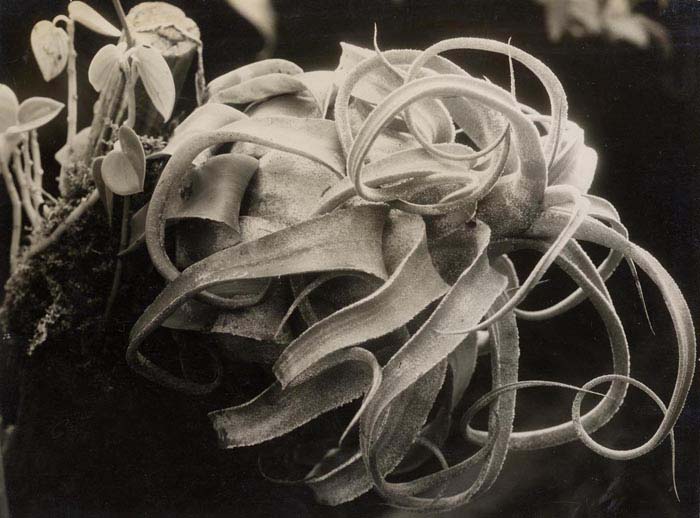
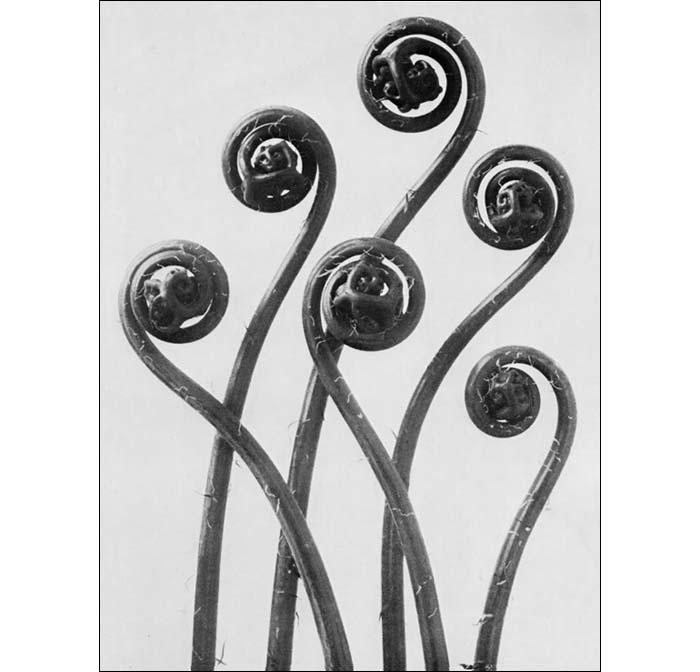
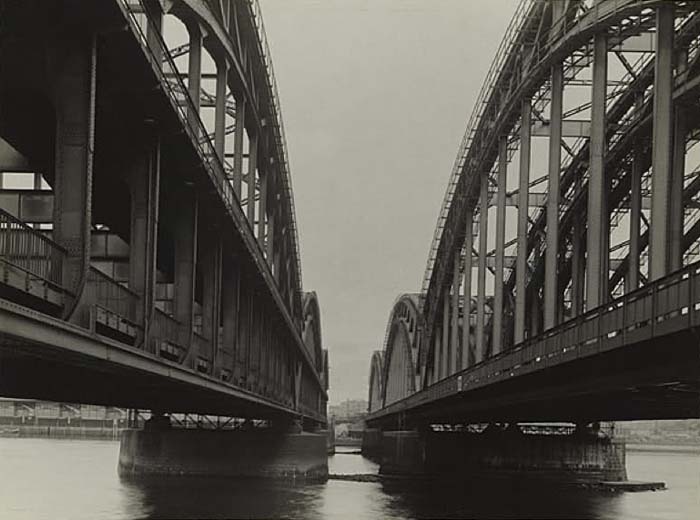
Some of his photos


You might also like