(May 17, 1916 – December 26, 1997)
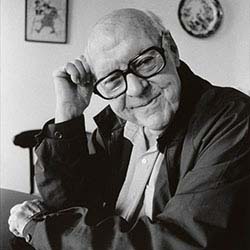 John Hinde was a British photographer born in Somerset, England. His interest in color photography began in the 1940s. From the late 1940s to the mid-1950s, he devoted himself to circus life, where he met his future wife. However, he soon returned to photography and, in 1956, left the circus and founded John Hinde Ltd. in Dublin to produce and distribute his color photographs of Ireland.
Hinde’s most famous work is that of the Butlin’s holiday camps, where he portrayed a welcoming and jubilant atmosphere. In 1972, he sold his company to pursue his hobby of painting. The Irish Museum of Modern Art (IMMA) recognized his work with a retrospective in Dublin in 1993. In 1997, Hinde died in Dordogne, France. At the time of his death, millions of his postcards had been sold worldwide.
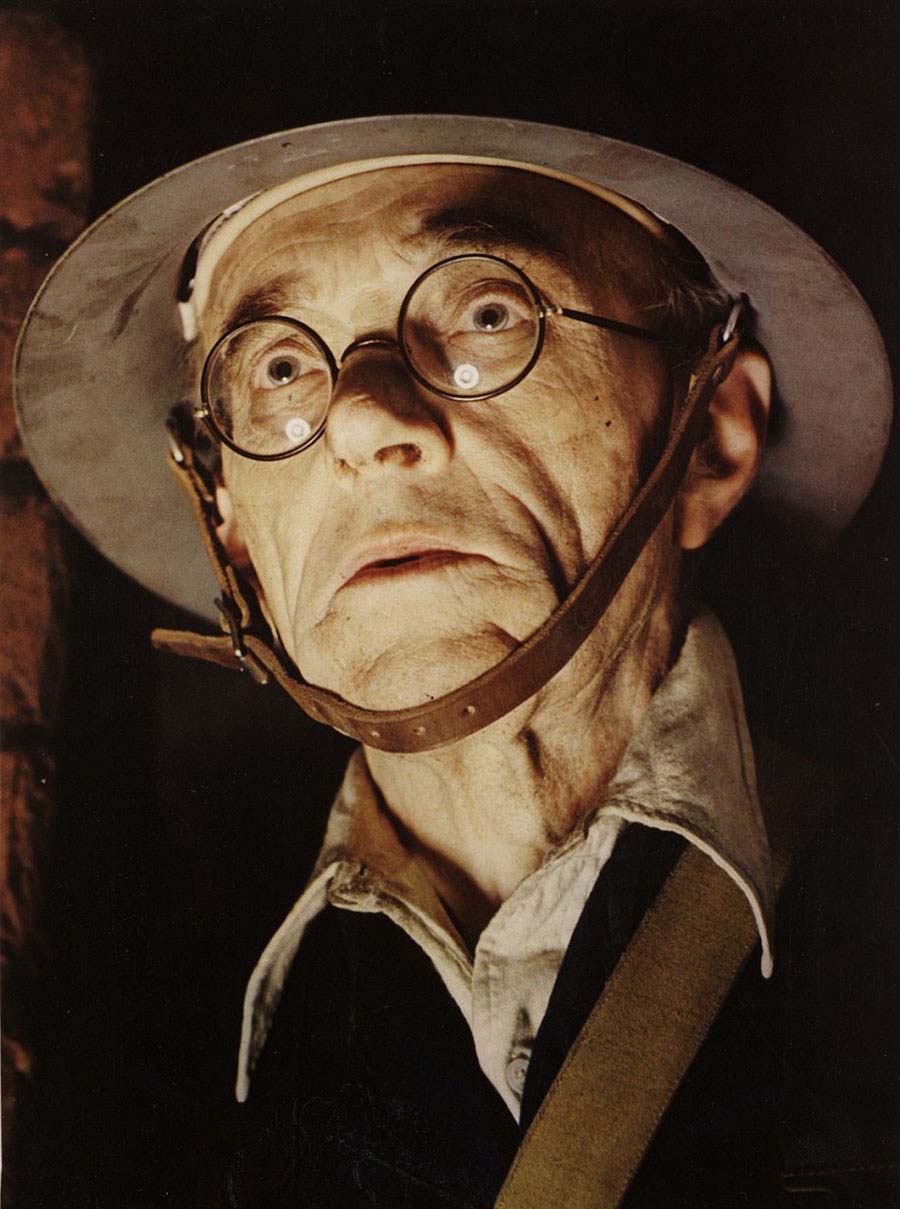
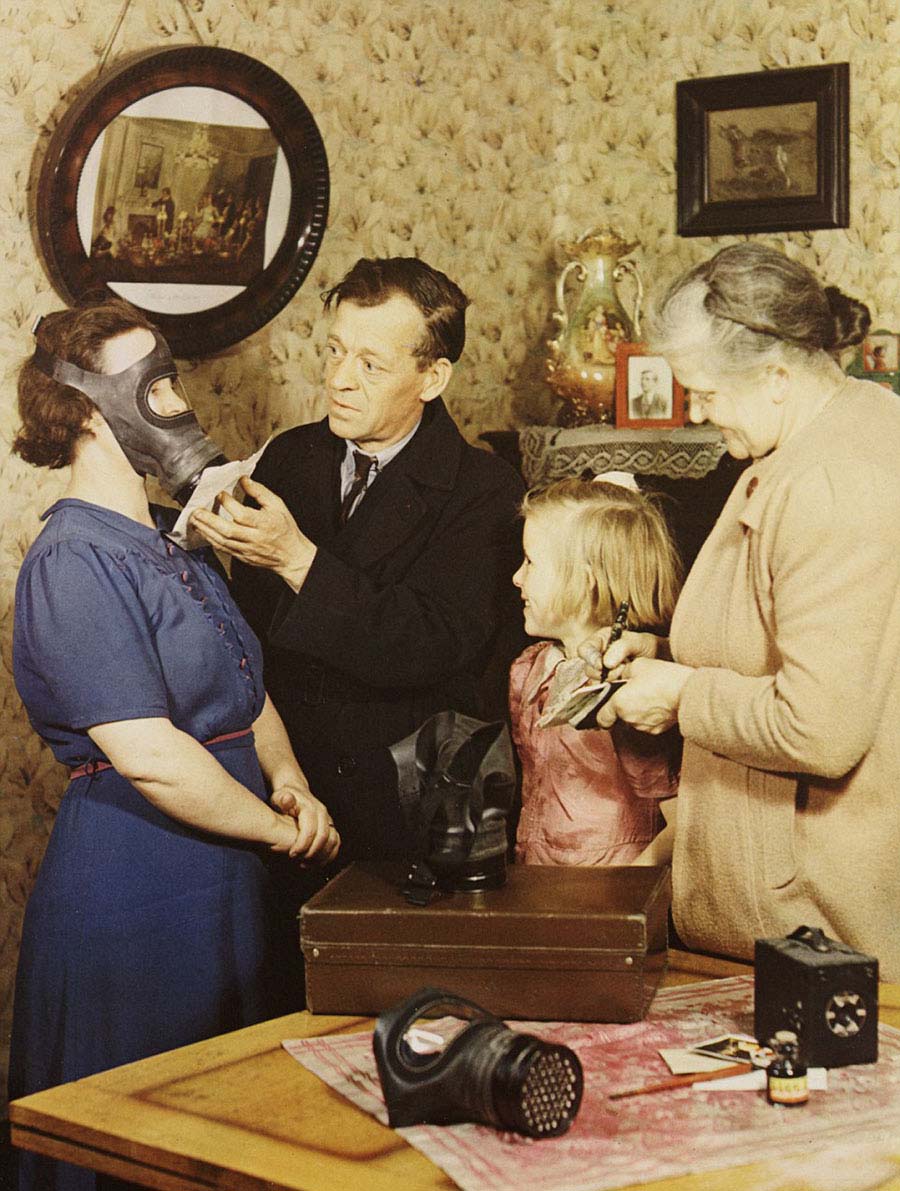
Hinde was born in 1916 in Street, Somerset, England, into a close-knit Quaker community. During the war, he remained true to his Quaker values and became a photographer for the civil defense forces instead of a soldier. Some of his photographs were published in magazines and color books, such as Of Cabbages and Kings, Citizens of War, and British Circus Life. His interest in photography led him to become an important pioneer of color photography.
Hinde briefly changed careers when he became the advertising manager for a circus in 1944. It was here that he met his wife Antonia Falnoga, a trapeze artist who was part of the circus. In 1954, he and Antonia founded their own traveling circus company in Ireland, called “The John Hinde Show.” However, this venture quickly failed, and Hinde left the circus business in 1956. He returned to his life as a photographer and founded John Hinde Ltd in Dublin that same year.
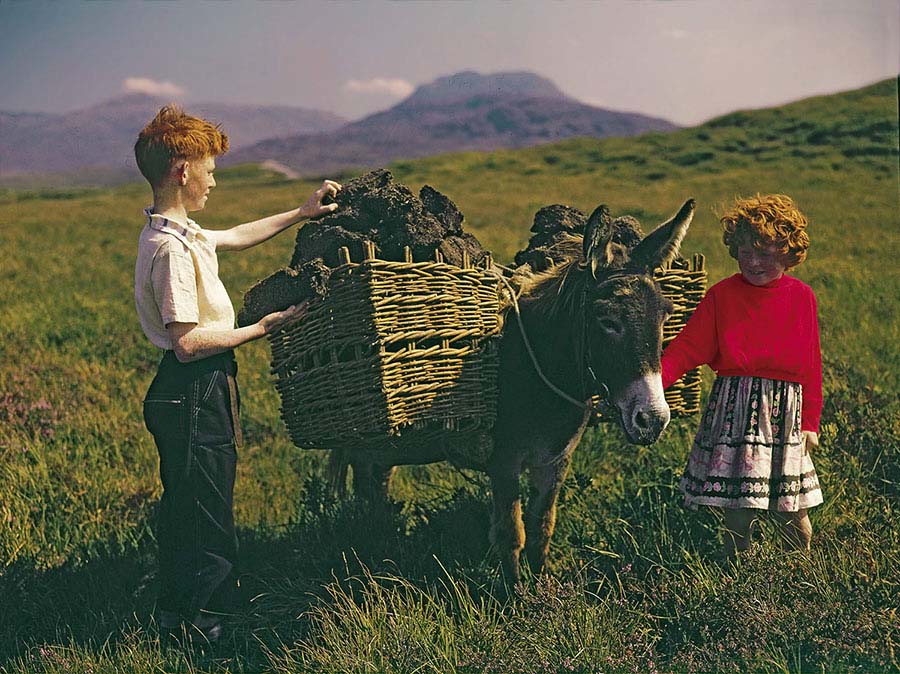
While traveling with the circus for twelve years, and in the years that followed, he began taking color photographs of the Irish countryside. At this time, Ireland was becoming a popular destination for tourists. Black-and-white postcards were preferred because it was believed that this method could better capture the romantic Irish landscape. Hinde, a color photographer, tried to find a way to achieve the same or better effect by adding color, something that would differentiate his images from others. He hoped to capture the vividness of the Irish countryside, as well as the imagination of his audience. After much thought, he devised a method that combined Irish stereotypes (donkeys, red-haired children, etc.) and the seemingly endless, lush landscape with vivid colors.
Sometimes Hinde enhanced the colors in his studio to achieve the desired effect. He was well known for staging or changing a scene to suit his strict style. If he found something unpleasant or out of place in his pictures, he would simply cover it up or move it to get the best shot. This practice was so common that he kept a saw in the back of his car so that if there was an unsightly object in the view of his camera, he could cut a nearby rhododendron bush and use it to hide the eyesore. Needless to say, many rhododendrons appear in Hinde’s postcards of Ireland. This series of photographs was a great success, not only with tourists but also with the Irish, who enjoyed reminiscing about the vibrant environment in which they lived.
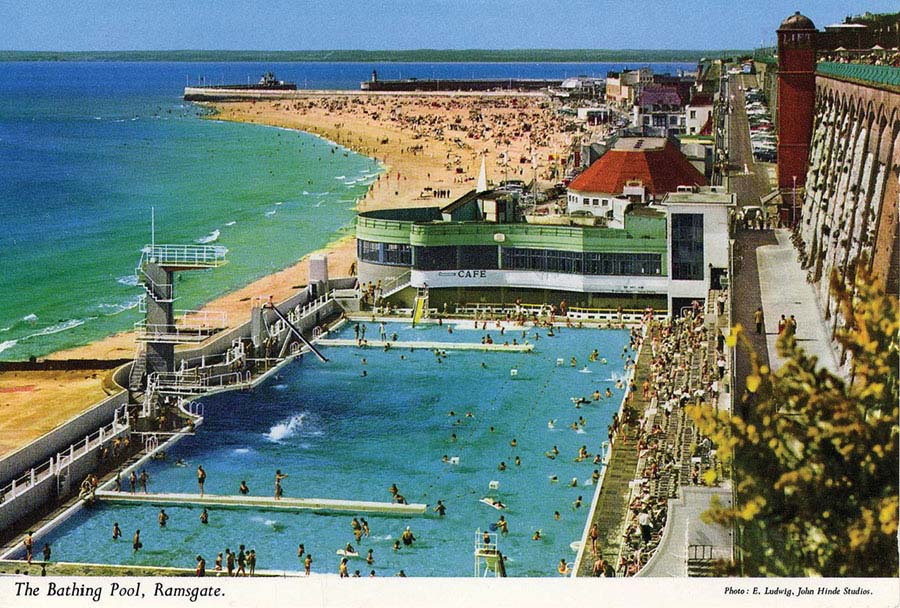
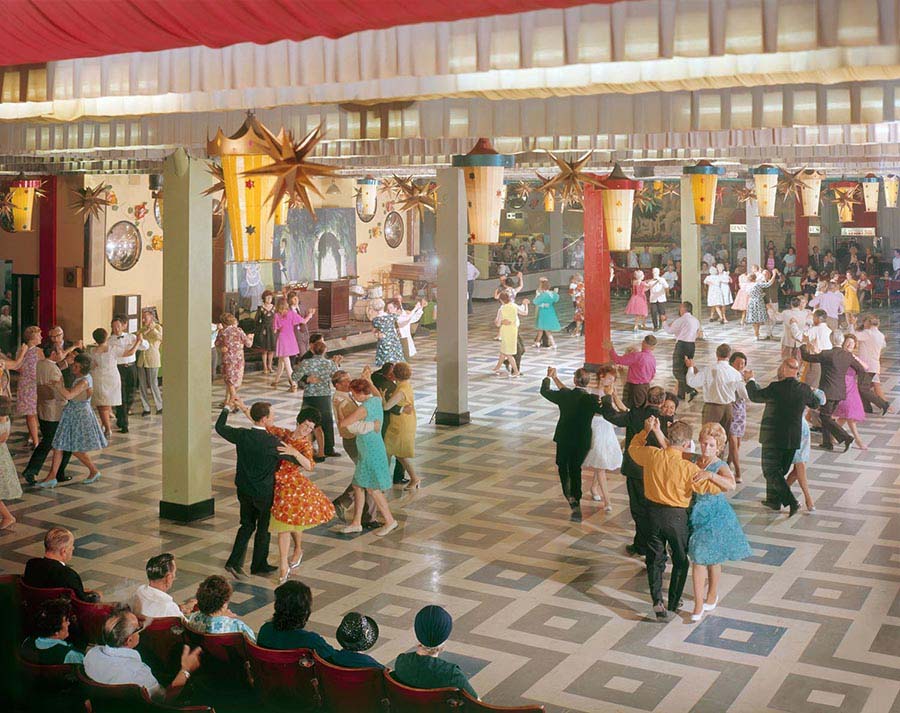
From the late 1960s to the early 1970s, Hinde worked on his best-known production: postcards of Butlin’s holiday camps. Billy Butlin had founded the camps as a vacation spot for the working class, offering great excitement at low cost. Butlin hired Hinde to produce postcards that reflected the lively and fun atmosphere of his camps. By then, Hinde was working more as an art director than a photographer, so he hired two German photographers, Elmar Ludwig and Edmund Nägele, and one British photographer, David Noble. They traveled to the various camps and set up the necessary lighting and photographic equipment, often taking a whole day to get everything ready.
Hinde’s images portrayed vacationers enjoying everything Butlin’s had to offer and having a great time. The photographers used large-format cameras and Ektachrome film to capture the optimistic tone Butlin was looking for. The postcards showed scenes of people eating in lavishly decorated dining rooms, large indoor swimming pools, themed bars, and park attractions. Real vacationers were used in the shots, but, as in the Ireland photos, sets were often added to capture the energetic feel of the environment. Hinde often enhanced certain colors in post-production to create a vivid, idealized vision of a Butlin’s vacation. The combination of images of a fun-filled family vacation and vibrant colors produced a nostalgic portrait for the masses.
Hinde’s postcards were immensely popular, even though Hinde considered the photographs to be of no artistic value. In 1972, he decided to sell his company to the Waterford Glass Group to devote himself to his hobby of landscape painting.
Although Hinde never viewed his photographs with much reverence, the Irish Museum of Modern Art recognized his photographic work with a retrospective in Dublin in 1993. Since his death in 1997, exhibitions of his photographs have traveled around the world, and he has proven to be the world’s most successful postcard producer. His works have also been compiled into books, such as Hindesight, a collection of postcards from Ireland, and Our True Intent Is All For Your Delight, a collection of postcards from Butlin’s.
Some of his postcards form the basis of a 30-minute Irish television program called Cartai Phoist, in which three postcards are selected per episode and, with the help of a contemporary Irish artist/celebrity/television personality, the postcard is recreated by finding the original people (or their closest relatives) and standing in the exact spot where the original postcard photograph was taken.
BIBLIOGRAPHY
- Hindesight: John Hinde Photographs and Postcards by John Hinde Ltd. 1935–1971. Irish Museum of Modern Art, 1993.
- Our True Intent Is All for Your Delight: The John Hinde Butlin’s Photographs. By Martin Parr. London: Chris Boot, 2002.
- Nothing to Write Home About: Celebrating the Heyday of the British Holiday Postcard: a Collection of John Hinde Postcards and Their Messages.
- Postcards – by Martin Parr and Thomas Weski. London: Chris Boot, 2008. Contains a selection of John Hinde cards among others.
SOME PHOTOS

You might also like